Low-E glass, short for “low emissivity”, is a type of energy-efficient glass with a nearly invisible metallic coating that helps control heat transfer. It keeps your home warmer in winter by reflecting heat inside and cooler in summer by deflecting solar heat. It also blocks harmful UV rays that can fade furniture and flooring. Here’s why it might be worth considering:
- Energy Savings: Reduces energy loss by 30–50%, lowering heating and cooling costs.
- UV Protection: Blocks up to 99% of UV rays, preserving your interiors.
- Comfort: Minimizes hot spots, drafts, and condensation for a more consistent indoor temperature.
- Cost: While it costs 10–15% more upfront, the long-term savings and durability make it a smart investment.
If your windows are older, lack coatings, or you notice issues like drafts or high energy bills, upgrading to Low-E glass could make a noticeable difference in comfort and efficiency. Keep reading to learn how it works and which type might suit your home best.
sbb-itb-a4eb837
Common Problems with Standard Windows
Low-E Glass vs Standard Glass Performance Comparison
Standard windows without energy-efficient coatings allow a lot of heat to pass through, leading to energy loss, uneven temperatures inside your home, and even condensation that can cause damage over time. The glass in these windows acts as a bridge for heat transfer between your home’s interior and the outdoors. In winter, heat escapes, making your furnace work harder. In summer, about 76% of sunlight that hits standard double-paned windows enters your home as heat.
This energy loss isn’t just a drain on your wallet – it’s also uncomfortable. You might feel hot spots near windows during summer or cold drafts in winter. Condensation is another issue. When warm indoor air meets the colder glass, moisture forms, which can eventually harm window casings. These challenges highlight why understanding heat and UV impacts is crucial for considering solutions like Low-E glass.
How Heat Transfer Affects Your Home
Two important metrics – U-factor and Solar Heat Gain Coefficient (SHGC) – show how inefficient standard windows can be. These are the very areas where Low-E glass excels.
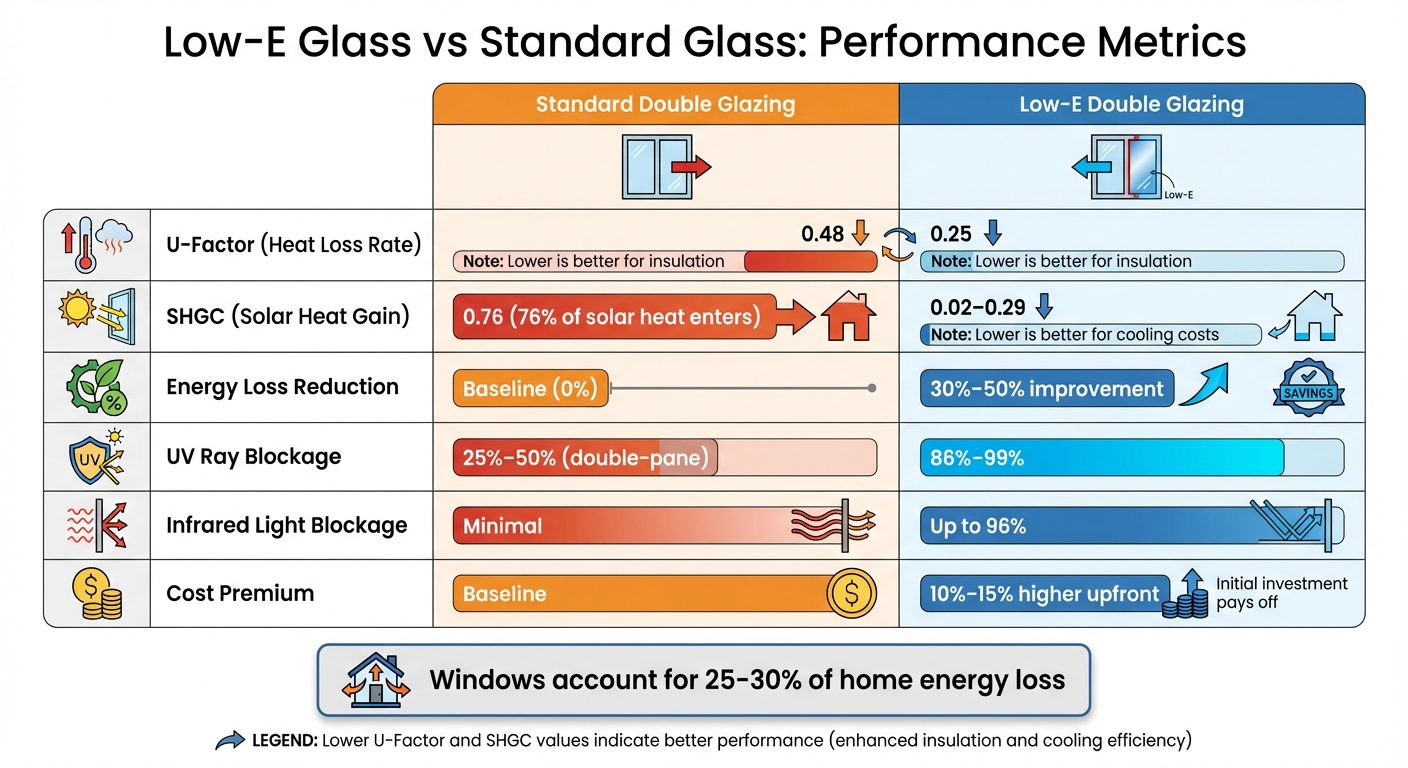
- U-factor measures how well a window prevents heat from escaping. Lower numbers mean better insulation, with standard double-glazed windows typically at 0.48. Low-E glass, however, can go as low as 0.25.
- SHGC measures how much solar heat enters through the window. Standard double glazing scores 0.76, meaning it lets in 76% of solar heat. In summer, this can raise indoor temperatures by 10°F to 15°F, straining your cooling system.
| Metric | What It Measures | Standard Double Glazing | Low-E Double Glazing |
|---|---|---|---|
| U-Factor | Heat loss rate | 0.48 | 0.25 |
| SHGC | Solar heat gain | 0.76 | 0.02–0.29 |
| Energy Loss Reduction | Efficiency improvement | Baseline | 30%–50% lower |
If you live in colder regions, focus on windows with a low U-factor to retain heat. In sunnier, warmer areas, opt for a low SHGC to block solar heat and lower cooling costs.
How UV Rays Damage Your Interiors
While standard glass blocks most UVB rays (the type that causes sunburn), it doesn’t stop UVA rays. These rays account for about 95% of the UV light reaching Earth and are still largely transmitted through standard windows. Single-pane clear glass allows 50% to 75% of UVA rays to pass, while double-pane windows reduce this to 25% to 50%.
UVA rays trigger photo-oxidation, breaking down materials inside your home. This leads to faded furniture, carpets, and hardwood floors, as well as weakened structural materials over time.
Want to know if your windows have protective coatings? Try the flame test: hold a match near the window and look at the reflections. If all four reflections are the same color, your windows likely lack energy-efficient coatings. These shortcomings make advanced options like Low-E glass essential for better thermal performance and UV protection.
What Is Low-E Glass and How Does It Work?
Low-E (low-emissivity) glass is designed with a nearly invisible metallic coating – about 1,000 times thinner than a strand of human hair – that reflects heat while still allowing visible light to pass through. Regular glass has a high emissivity (around 0.84), meaning it absorbs and radiates heat easily. In contrast, Low-E glass can have emissivity as low as 0.02, making it a much better insulator and an excellent way to cut energy costs.
The coating is made up of ultra-thin layers of metals or metallic oxides, such as silver, tin, or zinc, which act as a filter. While short-wave visible light passes through, the coating reflects long-wave infrared heat and blocks short-wave ultraviolet (UV) rays. This means in winter, it keeps indoor heat from escaping, and in summer, it reflects outdoor heat away.
When combined with insulating gas fills like argon or krypton and paired with vinyl frames to avoid thermal bridging, Low-E glass dramatically improves energy efficiency.
Types of Low-E Glass
There are two primary types of Low-E glass, each tailored to specific climates. Passive Low-E (hard coat) is applied to the glass during its production, creating a durable layer. This type is ideal for colder regions because it allows more solar heat to enter, providing natural warmth in winter. On the other hand, Solar Control Low-E (soft coat) is applied in a vacuum chamber and is designed to reduce solar heat gain. It’s particularly useful in warmer climates where keeping cooling costs down is essential.
If you’re unsure which option is best for your home, Vinyl Windows Co experts can guide you based on your climate and specific needs.
The Science Behind Low-E Coatings
The effectiveness of Low-E coatings depends heavily on where they are applied within an insulated glass unit (IGU). In double-pane windows, there are four glass surfaces. To maximize energy efficiency, the coating’s placement must align with the climate:
- Hot climates: The coating is placed on the second surface (inside the outer pane) to block heat before it reaches the air space.
- Cold climates: The coating works best on the third surface (inside the inner pane) to reflect indoor heat back into the room.
Modern Low-E windows also use non-conductive spacers, such as silicone foam or polymer materials, to prevent heat transfer at the edges. Vinyl frames further boost insulation by avoiding the heat loss often associated with metal frames.
Benefits of Low-E Glass for Your Home
Low-E glass doesn’t just improve thermal performance – it also brings noticeable advantages in energy savings, interior protection, and everyday comfort.
Energy Efficiency and Cost Savings
Low-E glass can cut energy loss through windows by 30% to 50% compared to standard glass. Its secret lies in the metallic coating, which acts as a thermal barrier. During winter, it reflects heat back into your home, keeping it warmer, and in summer, it bounces the sun’s heat away, keeping things cooler.
By blocking up to 96% of infrared light, Low-E glass reduces the workload on your air conditioner during hot months and eases the strain on your heating system during colder ones. This reduced strain can even help extend the life of your HVAC system. While Low-E glass costs about 10%–15% more upfront, the energy savings and lower maintenance costs make vinyl replacement windows a worthwhile long-term investment.
| Feature | Standard Glass | Low-E Glass |
|---|---|---|
| Energy Loss Reduction | Standard | 30–50% improvement |
| Infrared Light Blockage | Minimal | Up to 96% |
| HVAC System Impact | High strain | Reduced workload, extended lifespan |
| Monthly Utility Costs | Higher | Lower bills year-round |
UV Protection and Interior Longevity
Low-E glass blocks 86% to 99% of ultraviolet (UV) rays, offering protection against sun damage to your home’s interiors. Without this shield, carpets fade, hardwood floors lose their finish, and upholstery and photographs can discolor over time. By reducing fading damage by around 75%, Low-E glass helps preserve your flooring, furniture, and artwork, saving you from costly replacements.
Another practical perk? The Low-E coating is applied to the internal surfaces of the insulated glass unit, so it won’t scratch or wear off during cleaning.
Enhanced Comfort and Visual Appeal
Low-E glass doesn’t just save energy – it makes your home more comfortable. By keeping interior glass surfaces at a consistent temperature, it minimizes drafts and condensation, ensuring a more balanced indoor climate year-round. Unlike standard glass, which can lead to chilly drafts in winter and hot spots in summer, Low-E glass keeps things steady.
And don’t worry about losing natural light. The coating is virtually invisible – it won’t tint your windows or block sunlight. Plus, companies like Vinyl Windows Co offer customizable designs, so you can pair the performance of Low-E glass with a variety of frame styles to match your home’s look and feel.
How to Decide if Low-E Glass Is Right for Your Home
Factors to Consider in Your Home
Start by evaluating your current windows. If they were installed before 1990, there’s a good chance they don’t have Low-E glass coatings. To confirm, you can try the flame test mentioned earlier in the article.
Your local climate plays a big role in determining the right type of Low-E glass. For homes in colder northern states, hard-coat Low-E glass with a low U-factor is ideal for keeping heat inside during winter. On the other hand, if you live in a hotter southern region, soft-coat Low-E glass with a low Solar Heat Gain Coefficient (SHGC) is better at blocking external heat, which can help reduce cooling costs. For areas with distinct seasons, coatings like Low-E4 or SmartSun strike a balance by managing both summer heat and winter insulation.
Window orientation is another important factor. South- and west-facing windows get the most direct sunlight, so they benefit from advanced solar control coatings to prevent overheating and protect your interiors from UV damage. North-facing windows, which receive less sunlight, often don’t require as much solar protection.
Pay attention to signs of poor window performance, like drafts, condensation, fading furniture, or high energy bills. These issues could signal that your windows aren’t doing their job efficiently. Since windows account for 25% to 30% of a home’s energy use for heating and cooling, addressing these problems can improve comfort and cut energy expenses.
After considering these factors, consulting with a professional can help you make the best choice for your home.
Working with Vinyl Windows Co Experts
Because the ideal Low-E coating depends on factors like climate, window orientation, and how you use each room, it’s a good idea to schedule a professional assessment. Vinyl Windows Co dealers can evaluate your specific needs, explain NFRC labels to compare U-factors and SHGC ratings, and recommend whether hard-coat or soft-coat Low-E glass is the best fit for your home.
They can also check if you qualify for utility rebates or federal tax incentives, as Low-E windows often meet ENERGY STAR® standards. While Low-E glass typically costs about 10% to 15% more than standard glass upfront, the energy savings, UV protection, and potential rebates make it a worthwhile investment over time. Reach out to a Vinyl Windows Co dealer for personalized advice tailored to your home.
Conclusion: Is Low-E Glass Worth the Investment?
Low-E glass offers a range of benefits, from improved energy efficiency to UV protection and increased home comfort. But does it justify the cost?
By reducing energy loss by up to 50% and lowering heating and cooling expenses by 10% to 30%, Low-E glass addresses one of the biggest culprits of energy inefficiency – windows, which account for about 30% of a home’s total heat loss. Beyond cutting energy bills, it protects your interiors from fading due to UV exposure and helps maintain consistent indoor temperatures, which can extend the life of your HVAC systems.
While the upfront cost of Low-E glass ranges between $40 and $55 per square foot, the added expense per window is relatively small. When you factor in energy savings, less strain on HVAC systems, protection for your furnishings, and potential rebates for ENERGY STAR®-certified windows, the investment often pays off over time. Plus, energy-efficient upgrades can increase your home’s resale value.
For those ready to make the switch, Vinyl Windows Co offers Low-E glass options across their product lines. Their authorized dealers can guide you in choosing the right coating for your climate and ensure professional installation to maximize the benefits. In short, Low-E glass is a smart choice for energy savings, protecting your interiors, and enhancing your home’s overall comfort.
FAQs
Will Low-E glass make my rooms darker?
Low-E glass is designed to balance energy efficiency with maintaining natural light. While it may slightly reduce the amount of sunlight entering a room, especially with clear or transparent coatings, the difference is usually minor. Most homeowners won’t notice a significant change in brightness, as the glass is crafted to preserve a bright and welcoming atmosphere.
Which Low-E type is best for my climate?
When choosing Low-E glass, your climate plays a big role. In colder areas, Low-E coatings designed to reflect indoor heat back inside are great for maintaining warmth and cutting heating costs. On the flip side, if you live in a warmer region, you’ll want coatings that block solar heat to keep your home cooler and reduce air conditioning bills. For the best results, consult a professional installer who can recommend the right option based on your local weather and energy-saving objectives.
Can I add Low-E to existing windows?
Yes, you can add Low-E film to your current windows to boost energy efficiency and cut down on heat transfer. It’s an effective way to improve insulation without the need to replace the entire window.