
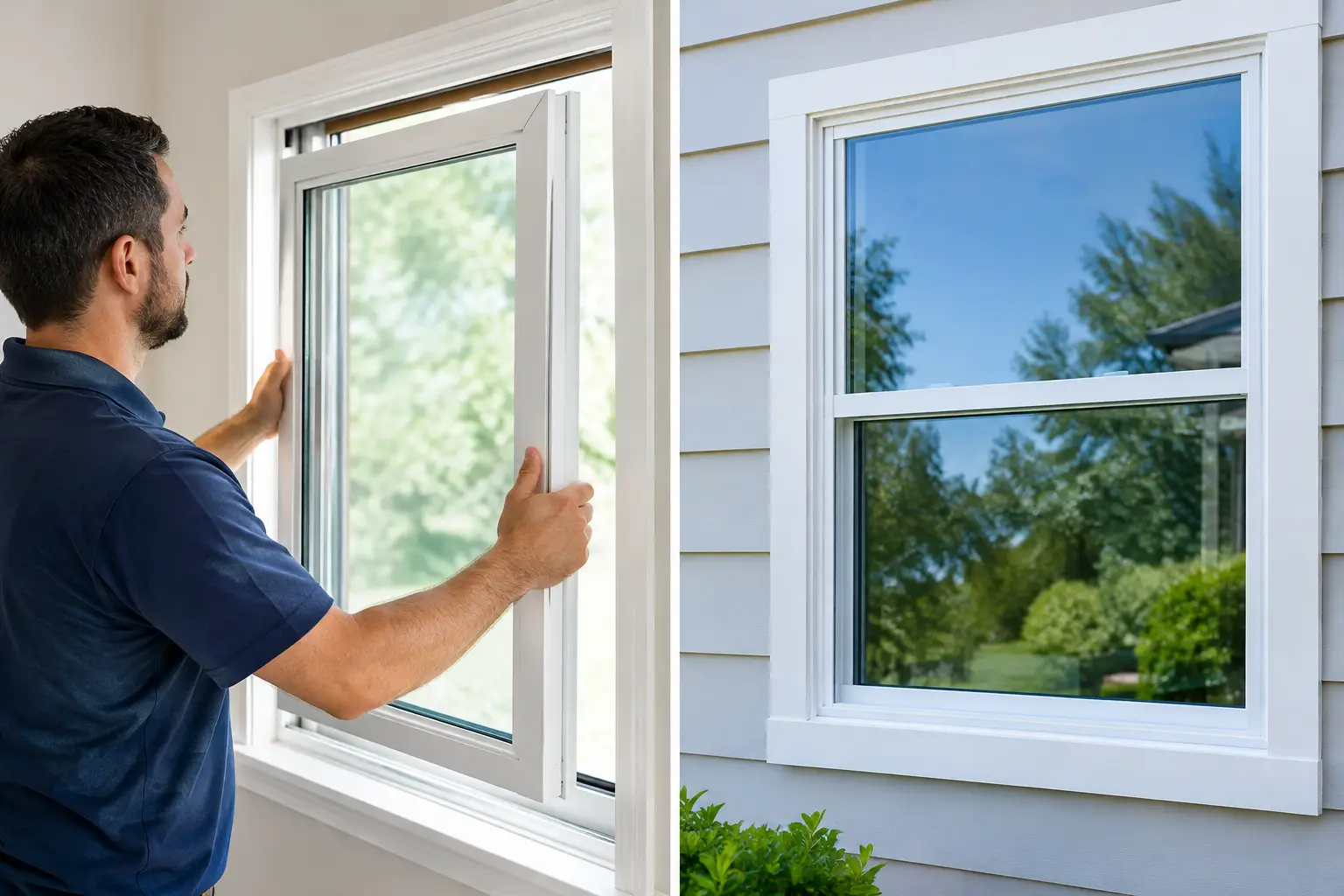
A window opening can look sound from across the room and still conceal frame rot, failed flashing, or a poor original installation. That is why window inserts versus full replacement is not simply a product choice. For contractors, it is an assessment decision that affects labor, scheduling, customer expectations, and the likelihood of future callbacks.
Insert windows can be an efficient, high-value solution when the existing frame is square, dry, and structurally sound. Full-frame replacement is the better path when the condition of the opening, the desired glass area, or the scope of the renovation calls for a clean start. The right recommendation begins with what is behind the trim, not with which option has the lower initial price.
Window Inserts Versus Full Replacement: The Core Difference
An insert replacement window, also called a pocket replacement, fits inside an existing window frame. The old sashes, stops, and hardware are removed, while the original frame remains in place. The new insulated window unit is measured to fit the available opening, then secured, insulated, sealed, and finished with exterior capping or trim as needed.
A full-frame replacement removes the existing window frame along with the sashes. This exposes the rough opening and makes it possible to inspect the framing, insulation, sheathing, and weather-resistive barrier around the window. The new unit is installed as a complete system, with flashing and air-sealing details suited to the wall assembly and product design.
Both approaches can provide a major performance upgrade over worn single-pane windows or units with failed seals. The difference is how much of the original opening remains in service and how much access the installer has to correct hidden problems.
When an Insert Window Is the Right Call
Insert windows are often the practical choice for homes with well-maintained wood frames, especially when interior trim is worth preserving. They can reduce disruption because the wall opening, interior casing, and much of the exterior finish may remain untouched. That can keep a replacement project moving efficiently, particularly on occupied homes with multiple openings.
For the installer, a successful insert project depends on accurate field measurements. The existing frame must be checked for width, height, depth, squareness, and consistent condition at each opening. A frame that is out of square can sometimes be managed within the manufacturer’s installation tolerances, but a distorted opening should not be forced into a pocket-install plan.
The strongest case for inserts is a sound existing frame with no signs of moisture damage or movement. When paired with quality vinyl construction, insulated glass, and reliable weather sealing, an insert window can improve comfort, operation, and appearance without expanding the project beyond what the home requires.
There is one trade-off contractors should explain clearly: an insert window reduces visible glass area because the new frame sits inside the old one. The loss is often modest, but it matters in rooms where daylight, sightlines, or egress dimensions are priorities. It also matters when replacing narrow double-hung, casement, or specialty-shaped windows.
When Full-Frame Replacement Protects the Project
Full-frame replacement is the more involved installation, but it gives the crew the information and access needed to solve problems rather than cover them up. Once the old frame is removed, the installer can identify deteriorated jambs, soft framing, gaps around the rough opening, inadequate insulation, and water intrusion that may not have been visible before demolition.
This approach is often warranted when an existing window has recurring leaks, rotted wood, frame damage, or poor operation caused by structural movement. It is also the better choice when the homeowner wants to change window style, adjust the size of the opening, improve egress, or recover as much glass area as possible.
A full-frame project requires more planning because exterior cladding, siding, brick veneer, stucco, interior trim, and wall finishes can all affect labor and finish details. Contractors should define those conditions in the estimate rather than treating them as afterthoughts. If siding removal, trim replacement, wall repair, or paint touch-up is likely, the customer should understand the scope before installation day.
The performance opportunity is significant. A full-frame installation allows the new window to be integrated with appropriate flashing, back dams where required, insulation, and air sealing. That work helps manage bulk water and air movement at the opening, which is just as important as the glass package selected for the window.
Evaluate the Existing Opening Before You Quote
A reliable recommendation should come from an on-site inspection, not a photo and a rough opening measurement. Start by operating the window. Binding sashes, visible gaps, staining, soft wood, loose trim, or repeated condensation concerns can point to conditions that need closer review.
Examine the exterior as well as the interior. Failed caulk alone does not always mean the frame must come out, but water staining below the sill, deteriorated cladding, or evidence of trapped moisture changes the conversation. Remove a small section of trim when appropriate and permitted to verify the condition of the frame and surrounding materials.
Before recommending inserts, confirm that the existing frame is structurally sound, reasonably square, securely attached, and deep enough for the selected replacement unit. Verify that drainage paths will not be blocked and that the completed installation will meet applicable egress, safety glazing, and local code requirements.
For full-frame projects, plan the flashing sequence before the first unit is removed. Window performance depends on the complete installation system: sill preparation, water management, compatible flashing materials, fastening, perimeter insulation, and properly detailed exterior trim. A premium window cannot compensate for poor water management at the wall opening.
Compare Cost by Scope, Not by Product Price
Insert replacements usually cost less to install because they require less demolition and fewer finish repairs. They can be a smart option for a homeowner who needs dependable replacement windows without disrupting intact trim or siding. On projects with many sound openings, that labor efficiency can make the overall renovation more attainable.
Full-frame replacement generally carries a higher installed cost. The additional labor is real, and so are the materials required to restore trim, siding, or interior finishes. But a lower initial price is not a saving if the project leaves decay, leaks, or an undersized opening in place.
The most useful way to present pricing is to separate the product, installation, and anticipated repair scope. That protects the contractor from vague allowances and helps the homeowner see why two replacement approaches can have very different totals. It also makes change-order conversations easier if concealed damage is discovered after removal.
Match the Window Package to the Installation
Whether the job calls for an insert or full-frame replacement, the window itself should be specified for the climate, exposure, and homeowner priorities. Low-E insulated glass can help moderate solar heat gain and heat loss. Glass packages, spacer systems, and optional upgrades should be selected with the home’s orientation and local weather in mind rather than treated as one-size-fits-all features.
Frame construction matters as well. Durable vinyl frames, reinforced where needed, precision-welded corners, and quality-control inspections support dependable operation over years of temperature changes. Effective weather sealing helps reduce drafts and outdoor noise, while a well-built sash and hardware system makes the window easier for the homeowner to use every day.
For contractors, consistent sizing, clear specifications, and responsive ordering support are part of performance too. Accurate orders and products built to the agreed configuration help crews install efficiently and protect the schedule. A dependable warranty gives both the contractor and homeowner a clear path if support is ever needed.
Help Customers Choose Based on the Home
Many homeowners arrive expecting a simple answer: insert windows are cheaper, and full-frame windows are better. Neither statement is complete. The better recommendation is the one that fits the condition of the house and the customer’s goals.
An insert replacement may be the best value for a dry, stable frame with intact trim and a homeowner focused on efficiency and minimal disruption. Full-frame replacement may be the wiser investment where water damage, failed installation details, style changes, or glass-area concerns are part of the project. A contractor who explains that distinction clearly earns trust before the order is placed.
When an opening presents uncertainty, build time into the estimate for a proper inspection and document what you find. Careful measuring, honest scope discussions, and a window system built to perform in real homes, real climates, and real life give every replacement project a stronger foundation.


