

Choosing the right vinyl window color is a long-term decision that impacts your home’s look, resale value, and durability. Here’s what you need to know:
- Neutral Colors (White, Almond, Tan): These timeless shades work with most exteriors, reflect sunlight to prevent warping, and appeal to buyers. Choosing energy-efficient glass packages can further enhance these thermal benefits.
- Earthy Tones (Clay, Adobe): Perfect for homes with brick or stone, these colors offer a natural aesthetic and align with current design trends.
- Bold Shades (Black, Gray, Bronze): Ideal for modern styles, these colors create striking contrasts but require heat-reflective technology to avoid damage.
- Two-Tone Options: Different interior and exterior colors offer flexibility for matching your home’s design inside and out.
- Custom Finishes (Wood Grain, Textured): Mimic natural wood or add depth with textured finishes, perfect for unique styles.
- Durability: Modern heat-reflective technology ensures UltraView® vinyl windows in darker colors like black and bronze last without warping, even in hot climates.
Key Tip: Match your window color to mortar or trim for a cohesive look. Always test samples in natural light before choosing. Vinyl windows typically last 20 years, so pick a color that complements your home’s design for the long haul.
Neutral Color Options
Neutral colors are a staple when it comes to vinyl window selections. Shades like white and tan/beige are especially popular because they pair effortlessly with nearly any home interior or exterior style. These colors offer a clean, understated look that works harmoniously with brick, siding, or stucco exteriors, without drawing too much attention.
Light neutral tones also come with a practical perk: they reflect sunlight instead of absorbing it. This helps keep vinyl windows from reaching the 140°F threshold that could lead to warping.
From a resale perspective, neutral colors hold broad appeal among potential buyers, making them a safer choice for long-term value. As Milgard points out, "Selecting a shade in the same color family as your neighbors’ exterior paint jobs can help create a cohesive feel within your neighborhood". Considering vinyl windows are built to last about 20 years, opting for a neutral shade is often a smart move. With these benefits in mind, let’s explore some of the specific neutral shades available.
White, Almond, and Tan
Each neutral shade brings its own unique qualities. White remains a classic option, offering a crisp, versatile look that complements virtually any trim or siding. For those who want something softer than white, tan and light beige are excellent alternatives. These warmer tones pair beautifully with a wide range of siding colors and are especially popular in neighborhoods with earth-tone palettes.
Almond, sitting between white and tan, provides a warmer hue that works particularly well with brick exteriors. For homes with brick or stone, matching the window color to the mortar – often a green-beige like Almond or a green-gray like Clay – can create a cohesive, polished appearance.
Clay and Adobe
Clay and Adobe bring earthy undertones that deliver a refined, understated aesthetic. Clay, with its gray-brown hue, and Adobe, with its rich brown undertones, are perfect for rustic ranch-style homes or exteriors featuring natural stone. Adobe, in particular, blends seamlessly with other neutral tones like sage, gray-blue, or brown, making it a great choice for homeowners who want their windows to integrate subtly into the overall design.
These shades also align with the growing preference for nature-inspired palettes in 2026. Warmer neutrals like “greige” and khaki are becoming more popular than traditional gray for exteriors. Adobe-colored windows fit right into this trend, offering a grounded, timeless look that feels both modern and enduring.
sbb-itb-a4eb837
Bold and Contemporary Colors
Neutral tones might still hold their ground, but bold, contemporary colors are redefining curb appeal with their striking contrasts and modern vibes. These colors are especially effective with contemporary architecture, where clean lines and minimalist designs benefit from window frames that stand out.
Reflecting current design preferences, Advanced Window Products shares, "Cool neutrals – shades of gray, black, and navy – are all the rage, the perfect choice to add a contemporary space for every taste". These shades contribute to a sleek, urban aesthetic. Let’s dive into how specific colors like black, gray, bronze, and Sand Dune bring unique character to modern designs.
Black and Gray
Black windows have become a favorite for homeowners aiming to achieve bold, high-contrast designs. When paired with light-colored siding like white or cream, black frames create the iconic modern farmhouse look that remains a popular choice for both new builds and vinyl replacement windows. This contrast is particularly eye-catching on homes with large, symmetrical windows, where the dark frames highlight architectural details.
Gray, by contrast, offers a softer yet still contemporary option. It’s quickly replacing beige and tan as the go-to neutral for those looking for a sleek, updated aesthetic. Gray pairs beautifully with siding in shades of blue, blue-gray, or concrete, making it a standout choice for stucco exteriors and modern homes.
When choosing bold colors, window proportions matter. As color expert Maria Killam points out, "Black is a nice highlight for generously large and well-proportioned windows". However, on asymmetrical designs, dark frames can draw attention to irregularities.
Bronze and Sand Dune
Bronze brings an air of sophistication without the starkness of black. This deep, rich brown adds visual depth while remaining versatile. Maria Killam emphasizes its timeless appeal, stating, "A window colour like bronze that is also versatile essentially equals timeless". Bronze pairs beautifully with white, cream, or earthy stone and brick exteriors, offering a polished look that blends modern and traditional styles effortlessly.
Sand Dune, a warm neutral, strikes a balance between traditional and modern tones. It adds subtle depth without the heat absorption that darker colors tend to have. This shade works well with white, beige, gray, or brown siding, offering flexibility for homeowners seeking a contemporary edge. Plus, in dusty urban settings, mid-tone colors like Sand Dune are better at masking dirt compared to very light or dark frames.
Two-Tone Window Options
Two-tone windows, often called dual-color windows, feature different colors for the interior and exterior frames. In contrast, single-color windows use the same shade on both sides. This design allows homeowners to match their home’s exterior style while maintaining a more neutral and adaptable interior. It eliminates the risk of bold exterior colors clashing with interior decor or natural materials. This versatility opens up a range of popular combinations and customization options and their unique advantages.
Common Two-Tone Combinations
One favorite pairing is white interior frames with bold exterior colors like black or bronze. This combination delivers a sleek, modern look from the outside while keeping the interior bright and flexible. Another trending choice includes earthy tones like Clay or Cashmere for the exterior, which harmonize beautifully with materials like limestone or mortar, paired with classic white interiors.
Benefits of Two-Tone Finishes
The standout benefit of two-tone windows is their design adaptability. Homeowners can opt for an eye-catching or complementary exterior color without being locked into using the same shade indoors. White interiors remain a timeless choice, offering a clean and versatile foundation for any decorating style. For homes featuring natural materials like warm stone or brick, exterior frame colors such as Almond (a green-beige hue) or Clay (a green-gray tone) can blend seamlessly with the facade while keeping the interior light and traditional.
Custom Colors and Finishes
Vinyl windows have come a long way from the days of limited color options. Now, homeowners can go beyond the standard palettes and explore custom finishes that suit their personal style and complement their home’s architecture. Many manufacturers even offer custom color matching services, letting you pick a shade that blends perfectly with your siding, trim, or stone veneer. This means your windows can seamlessly coordinate with your existing design while adding a touch of individuality to your home.
Wood Grain and Textured Finishes
If you love the look of natural wood but dread the upkeep, wood grain vinyl windows might be the perfect solution. These finishes mimic the patterns of woods like cherry, English oak, and dark oak, giving you the rich aesthetic of real wood without the hassle of annual maintenance. No painting, staining, or refinishing needed! Plus, advanced technologies like TimberBond® ensure the finishes resist warping and fading, even in extreme temperatures over 140°F.
For a more modern twist, textured finishes – whether matte or glossy – can add depth and highlight the frame’s lines. These options offer a stylish alternative to the traditional smooth vinyl look, giving your windows a contemporary edge.
Color Matching Services
Customizing your windows doesn’t stop at textures. Color matching services make it easy to integrate your window frames with your home’s existing color scheme. By using sample charts or physical displays, you can find the perfect shade to harmonize with your exterior. Many manufacturers even provide physical samples or color chips so you can double-check the accuracy before making a decision.
If you’re replacing windows, some brands also offer charts designed to match existing frames from other manufacturers, simplifying the process. For those considering darker hues like black, bronze, or deep blue, it’s essential to confirm that the manufacturer uses heat-reflective pigments. These pigments help prevent the frames from warping or distorting under intense sunlight.
Vinyl Windows Co takes customization to a whole new level with options like bespoke color matching and premium finishes. These features ensure your windows not only enhance your home’s exterior but also maintain the durability and performance you count on.
How to Choose the Right Window Color
Picking the perfect window color isn’t just about flipping through sample charts. Since windows are a long-term investment, it’s important to get it right the first time. To refine your choice, think about how warm or cool palettes align with your home’s overall aesthetic.
Warm vs. Cool Color Palettes
Warm tones like Adobe, Sand Dune, Tan, and Bronze pair beautifully with earthy exteriors – brick, stone, or siding in shades of brown, beige, or sage. These colors create a seamless, natural look that complements the environment. On the other hand, cool tones such as Black, Gray, and crisp White deliver a sleek, modern vibe. For example, black windows can create a striking contrast against light siding, a hallmark of the modern farmhouse trend. Neutral shades like gray-browns (e.g., Pebble) are a great match for homes with blue or blue-gray exteriors.
Bronze is a versatile option that bridges the gap between fresh and earthy palettes. Its deep tone works well across various styles, making it a safe choice if you’re torn between warm and cool colors.
Matching Your Home’s Exterior
To create a polished look, consider matching your window color to your mortar rather than the main building material. For homes with stone or brick, shades like Clay or Almond that echo the mortar lines can tie the design together. Window proportions also matter – high-contrast colors like black are particularly striking on large, symmetrical windows. For traditional homes with white trim, white windows maintain a classic and timeless appeal.
Keep in mind that exterior light can make colors appear several shades lighter than they do on a sample swatch. An off-white color, for instance, might look much brighter once installed. Two-tone window options are another solution – they let you coordinate your exterior while keeping interior frames neutral and flexible.
While aesthetics are important, don’t overlook practical considerations like durability and maintenance.
Durability and Maintenance
Vinyl windows are popular for their low-maintenance qualities. They don’t need painting, staining, or refinishing, and they typically last about 20 years. Modern finishes are designed to resist pollutants like acid rain and harsh chemicals, ensuring they retain their look over time. If you’re considering darker colors, check that the manufacturer uses heat-reflective pigments to prevent warping or damage.
Cleaning vinyl windows is simple: use mild soap and water with a microfiber cloth. For tougher stains, mix one tablespoon of Murphy’s Oil Soap with a gallon of water. Avoid petroleum-based cleaners, abrasive pads, or high-pressure sprays, as these can harm the finish.
Color Performance Comparison
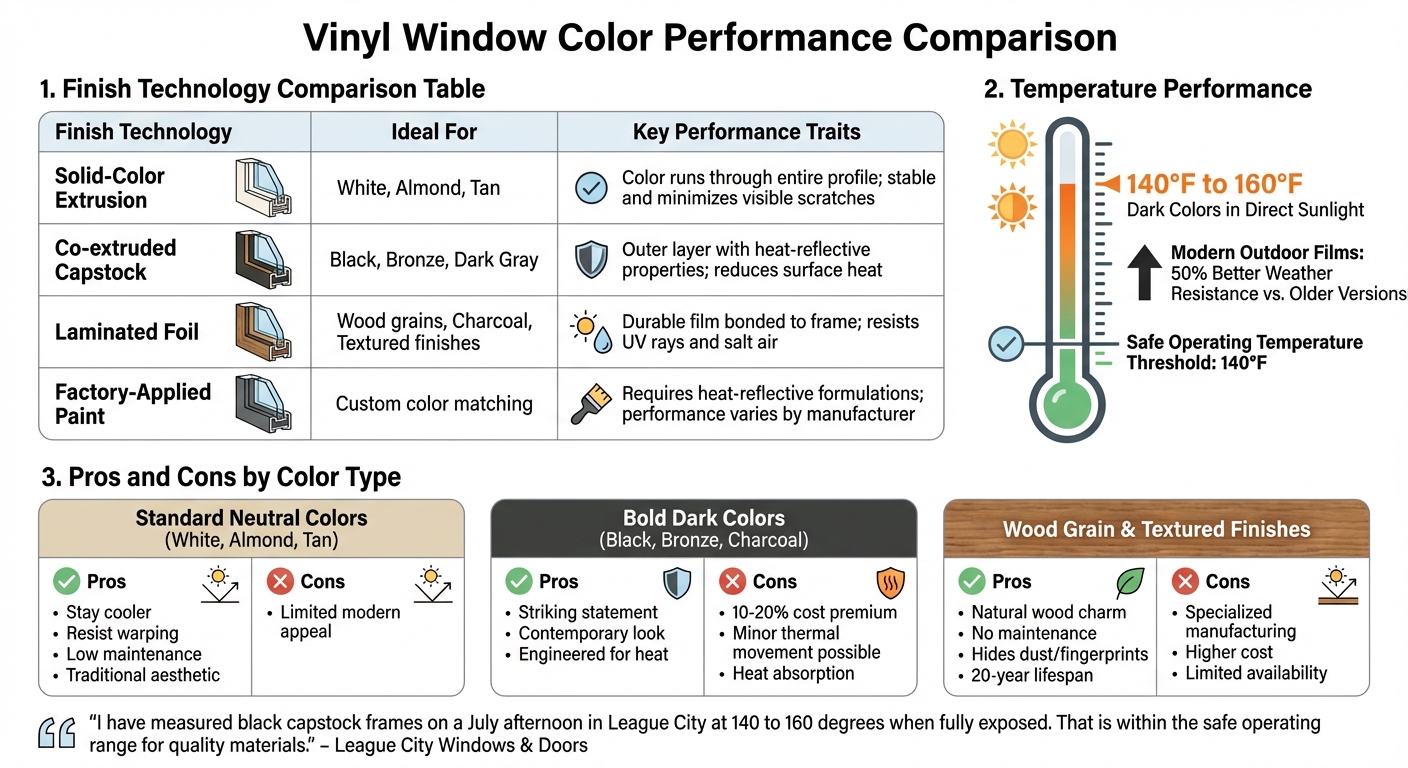
Vinyl Window Color Performance Comparison: Durability, Heat Resistance, and Maintenance
Vinyl window colors vary in how well they perform over time. Knowing how different finishes hold up under various conditions can save you from costly mistakes and ensure your windows look great for years.
Fade Resistance and Durability
Standard white and tan windows are reliable choices for long-term stability. These colors are integrated into the PVC material using a solid-color extrusion process, which means fading is minimal and scratches are less noticeable. These finishes have been trusted in the industry for good reason.
Bold and dark colors like black, bronze, and charcoal are more heat-absorbing, with frames in direct sunlight reaching surface temperatures of 140°F to 160°F. Fortunately, advancements in manufacturing have improved their durability. For instance, modern outdoor films now perform about 50% better in weather resistance compared to older versions. Technologies like ColorBond® also use heat-reflective pigments to keep these darker frames within safe temperature ranges.
"I have measured black capstock frames on a July afternoon in League City at 140 to 160 degrees when fully exposed. That is within the safe operating range for quality materials but tight tolerances and accurate Window installation… become more important." – League City Windows & Doors
Custom and wood grain finishes are designed to resist fading through advanced processes. Co-extruded capstock and laminated foils provide exceptional UV resistance, making them ideal for areas with high sun exposure or coastal conditions.
| Finish Technology | Ideal For | Key Performance Traits |
|---|---|---|
| Solid-Color Extrusion | White, Almond, Tan | Color runs through the entire profile; stable and minimizes visible scratches |
| Co-extruded Capstock | Black, Bronze, Dark Gray | Outer layer with heat-reflective properties; reduces surface heat |
| Laminated Foil | Wood grains, Charcoal, Textured finishes | Durable film bonded to the frame; resists UV rays and salt air |
| Factory-Applied Paint | Custom color matching | Requires heat-reflective formulations; performance varies by manufacturer |
If you’re considering bold or custom colors, check that the manufacturer uses UV-resistant foils or heat-reflective technology. Products tested in high-UV locations like Arizona or Florida are a safer bet for handling intense sunlight and temperature swings. This highlights the importance of finish technology when selecting colors for your windows.
Pros and Cons by Color Type
Knowing how different finishes perform can help guide your decision. Standard neutral colors (White, Almond, Tan) are practical and low-maintenance. They naturally stay cooler, resist warping, and retain their appearance with minimal upkeep. However, they lean toward a traditional aesthetic, which might not suit a bold or modern design.
Bold dark colors (Black, Bronze, Charcoal) make a striking statement and pair beautifully with contemporary architecture. These finishes typically add 10% to 20% to the base window cost. While they are engineered to handle the extra heat absorption, you may notice minor thermal movement, such as faint creaking, during the first hot season as the frames adjust.
Wood grain and textured finishes offer the charm of natural wood without the hassle of maintenance. They resist rot, eliminate the need for refinishing, and match the lifespan of standard vinyl frames. Plus, matte or textured surfaces are excellent at hiding dust, fingerprints, and water spots, which is especially handy in high-traffic or coastal areas. On the flip side, these finishes often require specialized manufacturing, which can impact their cost and availability.
For windows facing south or west in hot climates, lighter colors or dark frames with capstock technology are better at managing UV stress. In areas with salty air, laminated foils or capstock finishes designed to resist coastal wear are your best options.
Conclusion
Picking the perfect vinyl window color goes beyond simply matching your siding. This long-term decision – often lasting 20 years – impacts your home’s curb appeal, maintenance needs, and overall durability. Striking the right balance between style and practicality is key, whether you lean toward classic whites, bold blacks, or earthy neutrals that complement materials like stone and brick.
"Ideally, your windows should look perfectly integrated with the colours and materials you’re installing."
– Maria Killam, Color Expert
When selecting colors, focus on creating a cohesive exterior design. A useful tip? Match your window color to the mortar instead of the brick itself for a more unified appearance, especially with green-beige or green-gray tones. If you’re considering darker shades like black or bronze, ensure the windows are equipped with heat-reflective technology to avoid warping in temperatures exceeding 140°F. Also, keep in mind that colors often appear lighter outdoors than they do on a screen, so visiting a showroom to see samples in person is a smart move.
Two-tone designs are a great option if you want a bold exterior look while keeping white interiors that can adapt to changing décor styles. For a natural, warm aesthetic without the hassle of yearly upkeep, wood grain finishes are worth considering.
Lastly, Vinyl Windows Co offers a wide array of customizable color options that combine style and durability. Their performance-tested formulas are designed to maintain color vibrancy and withstand weathering. Whether you’re interested in standard neutrals, modern hues, or custom color matching, their selection can help you find the ideal fit for your home improvement project.
FAQs
What vinyl window color is best for resale value?
Neutral colors, such as white, are often the safest bet when it comes to boosting resale value. They appeal to a wide range of buyers, work well with different architectural styles, and improve curb appeal, making homes more inviting to prospective buyers.
How can I tell if a dark vinyl window color will warp in my climate?
Dark vinyl window frames can sometimes warp when exposed to high temperatures, particularly if they’re made from lower-grade materials or lack UV protection. Vinyl starts to soften at around 140°F and can melt at 212°F. To minimize this risk, opt for windows crafted with UV-resistant coatings, strong weather sealing, and high-quality materials. Additionally, proper installation and factoring in your region’s typical heat conditions are key to preventing warping issues.
Should I choose two-tone windows or a single color?
When deciding between two-tone windows and single-color windows, it really comes down to your home’s style and what you’re aiming for.
Two-tone windows give a modern and versatile vibe. With different colors on the inside and outside, they can boost your home’s curb appeal while blending seamlessly with your interior design.
On the other hand, single-color windows – commonly found in neutral tones like white or beige – offer a classic and unified appearance that works well with a variety of architectural styles.
Think about the look you want to achieve and how each option fits with your home’s overall design.


