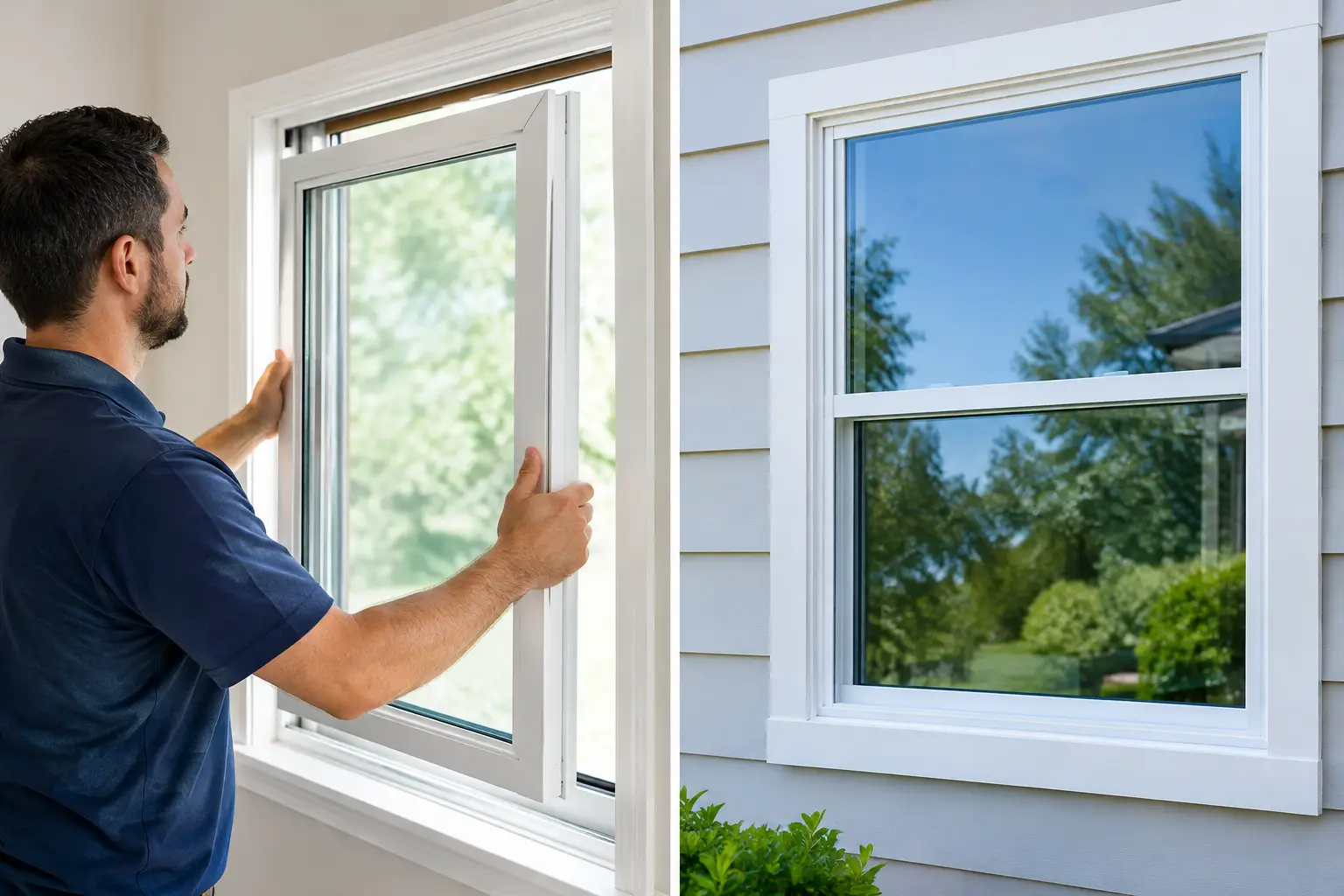
Windows are a key part of modern homes, enhancing style, energy savings, and comfort. Here are the top 5 window styles to consider:
- Casement Windows: Side-hinged, crank-operated windows offering clear views, full ventilation, and tight seals for energy efficiency.
- Picture Windows: Large, fixed windows that frame outdoor views while providing excellent insulation and minimal maintenance.
- Sliding Windows: Horizontal sliding windows with a space-saving design, ideal for wide openings and modern aesthetics.
- Awning Windows: Top-hinged windows that open outward, allowing ventilation even during rain.
- Double-Hung Windows: Classic style with two vertically sliding sashes, offering flexible ventilation and easy cleaning.
Quick Tip: Casement and picture windows are the most efficient, with U-factors as low as 0.20, while sliding and double-hung windows offer practical functionality for various spaces.
sbb-itb-a4eb837
1. Casement Windows
Casement windows are side-hinged and swing outward like a door, operated by a simple crank mechanism. This design makes them highly energy-efficient while offering sleek, modern lines that fit perfectly with contemporary home aesthetics.
Energy Efficiency
One of the key benefits of casement windows is their compression seal. When closed, the sash presses tightly against the frame, forming an airtight barrier that helps prevent drafts and air leaks. Casement windows typically achieve U-Factor ratings between 0.20 and 0.30, outperforming sliding windows (0.35–0.55) and double-hung windows (0.30–0.50). When paired with double or triple-pane glass featuring Low-E coatings and argon gas fills, these windows can block up to 95% of UV rays and reflect heat efficiently. Homeowners may even see energy savings of up to 40%. Additionally, the outward-swinging sash can capture side breezes, promoting passive cooling and reducing the need for air conditioning.
Design Compatibility with Modern Homes
Casement windows provide the uninterrupted views that modern designs often prioritize. Unlike double-hung windows with a center rail, casements use a single sash, offering a clear, unobstructed sightline that seamlessly connects indoor and outdoor spaces. Many modern homes pair these windows with bold black aluminum or fiberglass frames that contrast sharply with lighter exteriors and maximize the glass area. Extra-large casement windows – some as tall as 8 feet – are also available, creating dramatic architectural statements in open-concept living spaces.
Functionality and Usability
The crank mechanism makes casement windows especially easy to operate, even in hard-to-reach places like above kitchen sinks or bathroom counters. They open fully from top to bottom, providing maximum ventilation – twice as much as double-hung windows. Some designs feature hinges that allow the sash to pivot inward, making it simple to clean both sides of the glass from inside your home. For the best airflow, consider installing casement windows in corners or areas that can take advantage of side breezes to improve cross-ventilation.
Durability and Maintenance
In addition to their energy efficiency and usability, casement windows are built to last. Modern materials like vinyl, fiberglass, or composite resist fading, moisture, and corrosion, ensuring long-term durability. The tight seal not only enhances energy performance but also protects internal components from weather, reducing wear on seals over time. To keep them in top shape, regularly lubricate the hinges and check the weatherstripping. With proper care, casement windows can provide decades of reliable performance with minimal maintenance.
2. Picture Windows
Picture windows are stationary, non-operable windows designed to frame outdoor views like a piece of artwork. With no moving parts, hinges, or hardware, they offer a permanent, airtight seal, making them one of the most energy-efficient window options available.
Energy Efficiency
Picture windows are known for their impressive energy performance, with U-factors ranging between 0.17 and 0.25, surpassing casement and double-hung windows. Some models, especially those featuring triple glazing and Low-E coatings, can achieve U-factors as low as 0.20.
Their fixed design eliminates the need for weatherstripping and moving components, reducing potential air leaks. High-quality vinyl picture windows can cut heating and cooling costs by 20% to 30% compared to older window styles. Additionally, modern Low-E coatings reflect infrared heat, block up to 99% of UV rays, and allow for abundant natural light, helping reduce daytime lighting expenses.
Design Compatibility with Modern Homes
Picture windows are a hallmark of modern architecture. Since they don’t need to accommodate moving sashes, they can be manufactured in much larger sizes, including floor-to-ceiling designs that make bold architectural statements. Many contemporary homes feature ribbon windows – horizontal arrangements of multiple fixed units – that maximize natural light and create a seamless connection between indoor and outdoor spaces.
With their slim profiles and narrow sightlines, picture windows emphasize glass over frame, delivering a clean, minimalist aesthetic. Dark frame colors like black or charcoal provide a striking contrast against lighter walls for added visual appeal. Homeowners often pair large picture windows with smaller operable windows on the sides to balance wide, unobstructed views with functional ventilation.
Functionality and Usability
Picture windows excel in areas where natural light is a priority, such as stairwells or dining rooms, but they lack ventilation. To address this, consider pairing them with operable windows if airflow is needed. For spaces with west-facing views or water reflections, plan for window treatments to control glare while maintaining the view.
While cleaning the inside of a picture window is simple, reaching the exterior can be tricky, especially for upper floors. Safe access is essential for maintenance. Also, if you’re considering replacing operable bedroom windows with fixed ones, check local building codes to ensure compliance with emergency egress requirements.
Durability and Maintenance
Durability is another key strength of picture windows, contributing to their long-term reliability.
High-quality vinyl picture windows generally last 20 to 30 years, with premium models lasting up to 40 years. The fixed seal not only boosts energy efficiency but also shields the frame from weather damage. To keep your picture windows looking their best and ensure maximum light transmission, plan to clean the exterior glass at least twice a year, ideally in the spring and fall.
3. Sliding Windows
Sliding windows combine sleek design with practical functionality, making them a smart choice for modern homes. These windows open by sliding horizontally along a track, offering a space-saving solution that works well in areas where traditional swinging windows might not fit. With their streamlined appearance and minimal frames, they complement contemporary aesthetics while providing expansive views.
Energy Efficiency
Sliding windows today are designed with energy performance in mind. Their U-Factor ratings typically fall between 0.35 and 0.55, ensuring decent insulation. While they may not achieve the airtight seal of fixed windows, their interlocking sash design helps reduce drafts.
Energy-efficient features like double- or triple-pane glass filled with Argon or Krypton gas slow down heat transfer. Low-E coatings, which reflect infrared heat and block up to 99% of UV rays, can cut heat transfer by 30% to 50% compared to regular clear glass. Upgrading to high-performance Low-E glass may even lower energy bills by up to 40%. Modern frames made of vinyl or fiberglass with multi-chamber designs provide better insulation than older aluminum frames.
When shopping for sliding windows, look for the National Fenestration Rating Council (NFRC) label. This will confirm key ratings like U-Factor and Solar Heat Gain Coefficient, helping you make an informed decision. Proper installation is also crucial – well-sealed, level windows prevent heat loss through small gaps.
Design Compatibility with Modern Homes
Sliding windows fit seamlessly into the clean lines and open layouts of modern architecture. Their horizontal shape and slim frames maximize glass space, offering panoramic views and filling rooms with natural light. They also create a smooth indoor-outdoor flow, a hallmark of contemporary design.
Because they slide along a track instead of swinging outward, sliding windows are perfect for spaces with limited exterior clearance. Dark frame colors like black or charcoal are especially popular, creating bold contrasts against lighter walls. For a dramatic effect, floor-to-ceiling sliding windows can transform a wall into a stunning window feature, flooding interiors with daylight.
Functionality and Usability
Sliding windows are easy to operate, with smooth-gliding sashes that allow for flexible ventilation. Double-slider options let you open either side for more airflow. Many models include tilt-in or lift-out sashes, making it simple to clean the exterior glass from inside your home. To keep them running smoothly, regular cleaning of the tracks is important to prevent dirt and debris buildup. For basement bedrooms, ensure the windows meet local egress requirements to serve as emergency exits.
Durability and Maintenance
With fewer moving parts compared to double-hung or casement windows, sliding windows are less prone to mechanical issues over time. High-quality vinyl or fiberglass frames resist weather damage, moisture, and warping, even in challenging climates. With proper care, these windows can last 20 to 30 years.
Sliding windows are also a cost-effective option for modern renovations, with prices typically ranging from $775 to $1,672. Their durability, ease of use, and clean design make them a strong choice for updating your home.
4. Awning Windows
Awning windows combine practical ventilation with a sleek, modern design, making them a popular choice for contemporary homes. These windows are hinged at the top and open outward from the bottom, creating a unique “awning” effect. This feature allows fresh air to flow in, even during light rain – an especially handy perk for areas prone to frequent showers.
Energy Efficiency
Awning windows are designed for top-tier energy performance. Their crank mechanism activates a compression seal, forming an airtight barrier that’s more effective than standard weatherstripping. With U-Factor ratings ranging from 0.25 to 0.35, they outperform sliding windows (0.35–0.55) and double-hung options (0.30–0.50). Experts consistently rate them 4 out of 5 stars for both energy efficiency and air tightness. Adding Low-E coatings and inert gas fills like argon or krypton enhances their efficiency further, potentially cutting energy bills by up to 40% compared to basic glass.
To maximize their energy-saving potential, look for the NFRC label to verify U-Factor and Solar Heat Gain Coefficient ratings. Proper installation and regular maintenance – such as lubricating the crank and hinges – are essential for maintaining their performance over time.
Design Compatibility with Modern Homes
With their minimalist aesthetic, awning windows are a natural fit for modern homes. Their clean lines and unobstructed glass panes allow plenty of natural light while keeping the focus on the view outside. Slim frames made from materials like fiberglass, aluminum, or steel add to their contemporary appeal. Positioned high on walls, they offer privacy while ensuring excellent ventilation, making them ideal for spaces like bathrooms and bedrooms. Dark frames, particularly in black, create striking contrasts against light-colored exteriors, a popular trend in modern architecture.
“The design of awning windows provides a contemporary look while also serving practical functions, like allowing the window to be open even during rainy weather.” – Modernize
A common design choice pairs fixed picture windows with operable awning windows, either above or below, to balance wide-open views with functionality. This combination complements modern home trends while maintaining energy efficiency. Standard sizes are typically 24 inches by 36 inches, though custom options are widely available.
Functionality and Usability
Awning windows are known for their user-friendly crank mechanism, which requires minimal effort to operate. This makes them especially convenient for hard-to-reach areas, like above kitchen sinks or counters. High-quality cranks ensure smooth operation over time, even for those with limited hand strength. The outward-opening sash not only allows for ventilation during light rain but also prevents moisture from entering the home. If you’re considering installing these windows near outdoor walkways, ensure the sash won’t block the path when open.
One drawback to consider is cleaning. Since the exterior glass is harder to access from inside, you may need a ladder or professional cleaning services to keep them spotless. Despite this, the functionality and ease of use make these windows a smart choice for many homeowners.
Durability and Maintenance
Awning windows made from vinyl or fiberglass are built to last, resisting warping, cracking, and fading over time. Their simplified design, with fewer moving parts than double-hung windows, reduces the risk of mechanical failures. Prices range from about $477 to $1,425 per window, with premium models offering triple-pane glass for better performance . Upgrading to high-quality vinyl awning windows can deliver an average return on investment of 67.1% and potentially lower annual utility bills by 10% to 30%, depending on your location .
With proper care and maintenance, these windows can provide lasting performance, energy savings, and a sleek, modern look for years to come.
5. Double-Hung Windows
Double-hung windows are a favorite across the U.S., thanks to their timeless design and practical functionality. These windows feature two sashes – top and bottom – that slide vertically, giving you precise control over ventilation and modern performance benefits.
Energy Efficiency
Forget the drafty windows of the past – modern double-hung windows are built for energy savings. With features like Low-E coatings and inert gas fills, these windows provide excellent insulation. High-quality models include weatherstripping (like bulb seals and graphite foam) to block air leaks effectively. Integrated sash locks pull the sashes tightly together, reducing drafts compared to older styles. Look for a U-factor that meets ENERGY STAR standards to ensure maximum efficiency.
While double- or triple-paned glass can increase upfront costs, the long-term energy savings make it a smart investment. To keep your windows performing their best, inspect weather seals for cracks and use silicone spray or graphite powder to lubricate the tracks regularly.
Design Compatibility with Modern Homes
Double-hung windows blend seamlessly with modern home designs. With slim aluminum or fiberglass frames and a clean, minimalist appearance, they fit right into contemporary aesthetics. You can even customize sash sizes and grid patterns to match your style preferences, whether you want a bold grille design or a sleek, open look.
“Whether you want a bold grille pattern or a minimalist open flush look, you’ll find window features to match your specific needs and enhance curb appeal.” – Anna C, Content Manager, MyHomePros.com
Since the sashes slide vertically within the frame, these windows don’t need exterior clearance. This makes them perfect for homes with limited outdoor space or windows near walkways and patios. Standard sizes range from 24 to 48 inches wide and 36 to 72 inches high, with custom adjustments available in 1/8-inch increments for a perfect fit.
Functionality and Usability
Double-hung windows are not just stylish – they’re practical too. The dual-sash design allows for flexible ventilation. Open the top sash to let warm air out while the bottom sash brings in cooler air, creating a natural airflow. For families with children or pets, opening only the top sash provides ventilation while keeping the lower sash closed for safety.
Cleaning is also a breeze. Tilt-in sashes let you clean both the inside and outside glass from inside your home, which is especially handy for second-story windows. If you notice a sash that feels heavy or won’t stay open, replacing the sash balances can restore smooth operation.
Durability and Maintenance
Modern double-hung windows are designed to last, with minimal upkeep required. Vinyl and fiberglass frames resist rotting, warping, and UV damage, making them far more durable than traditional wood. Their streamlined design reduces the number of parts that might fail over time.
Prices typically range from $300 to $850 per window (excluding installation), though premium models can exceed $1,000. For urban homeowners, laminated or sound-control glass is an excellent upgrade to reduce outside noise. These features make double-hung windows a practical, long-lasting choice for any home.
Window Style Comparison
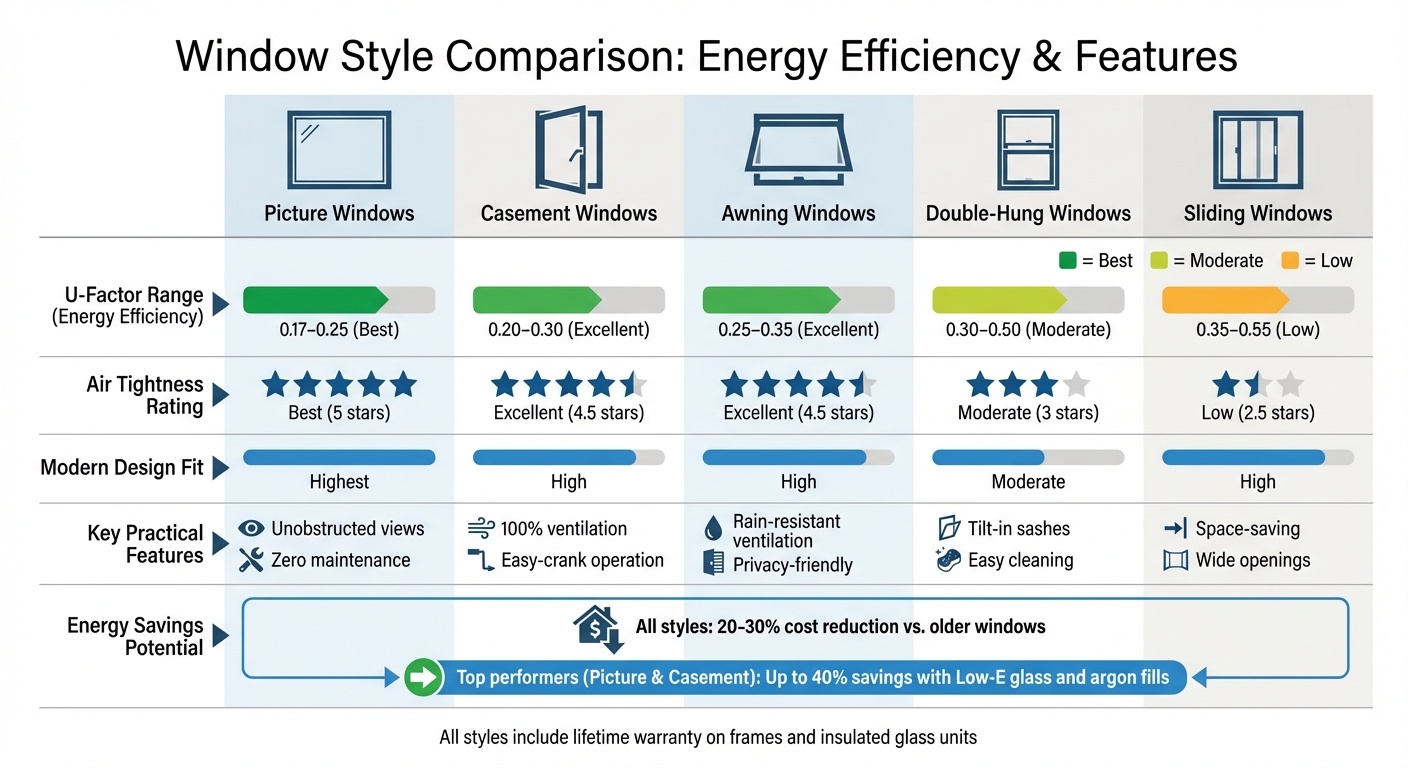
Window Styles Energy Efficiency and Features Comparison Chart
When choosing windows for your modern home, it’s important to weigh energy efficiency, design, and functionality. Here’s a breakdown of how the five window styles from Vinyl Design stack up.
Picture windows lead in energy efficiency, boasting U-factors as low as 0.17–0.25. Their fixed design, with no moving parts, ensures an airtight seal that minimizes heat loss. Casement windows follow closely with U-factors ranging from 0.20–0.30, thanks to their tight compression seals. Similarly, awning windows perform well, with U-factors between 0.25–0.35, offering effective sealing against air leakage. On the other hand, double-hung windows typically have U-factors of 0.30–0.50, and sliding windows fall between 0.35–0.55. The higher air leakage in these styles is due to their movable sashes, which can compromise the seal over time.
All window styles come with a lifetime warranty covering both the frame and insulated glass units, providing peace of mind for homeowners. Below is a quick comparison to help you decide which style suits your needs best:
| Window Style | U-Factor Range | Air Tightness | Modern Design Fit | Practical Features |
|---|---|---|---|---|
| Picture | 0.17–0.25 | Best | Highest | Unobstructed views; zero maintenance |
| Casement | 0.20–0.30 | Excellent | High | 100% ventilation; easy-crank operation |
| Awning | 0.25–0.35 | Excellent | High | Rain-resistant ventilation; privacy-friendly |
| Double-Hung | 0.30–0.50 | Moderate | Moderate | Tilt-in sashes for easy cleaning |
| Sliding | 0.35–0.55 | Low | High | Space-saving; ideal for wide openings |
Switching to high-efficiency vinyl windows can significantly lower heating and cooling costs – by 20–30% compared to older windows. With advanced features like Low-E glass and argon gas fills, some installations can even achieve up to 40% energy savings. For homes that prioritize both style and performance, casement and picture windows stand out as top choices, offering a blend of sleek design and excellent energy efficiency.
Conclusion
Let’s break it down: casement windows shine in modern designs, offering tight seals and full ventilation while keeping a sleek, contemporary look. Picture windows, with U-factors as low as 0.20–0.25, are perfect for energy efficiency and framing scenic views. Sliding windows fit beautifully with mid-century modern aesthetics, thanks to their horizontal lines and space-saving design. Awning windows, on the other hand, add a touch of architectural flair and allow for ventilation even during rainy weather. And if you’re after easy maintenance with a classic feel, double-hung windows remain a solid choice. Together, these options balance design, energy efficiency, and functionality – key elements for any modern home.
Practical factors also play a big role. Think about your home’s orientation and climate when choosing windows. For north and east-facing sides, high Energy Rating windows can help maximize solar gain. On the sunnier south and west sides, opt for low-to-mid Energy Rating products to better regulate indoor temperatures. And don’t forget to match your windows to your home’s style: casement and picture windows pair well with contemporary designs, sliding windows complement minimalist spaces, and double-hung windows bring a timeless touch to transitional homes.
Vinyl Windows Co offers a range of high-performance vinyl windows designed to meet today’s energy standards while maintaining the sleek lines homeowners love. With U-factors between 0.20 and 0.25, multi-chamber frame construction, and precision weathersealing, their windows deliver excellent thermal efficiency and durability. Plus, every style comes with a lifetime warranty covering both frames and insulated glass units, ensuring your investment stands the test of time. Whether you prioritize energy savings, style, or functionality, there’s a design to match your needs.
Ultimately, the right windows can enhance your home’s look, comfort, and energy performance. Focus on what matters most to you – be it natural light, ventilation, or lower energy bills – and choose windows that check all the boxes.
FAQs
Which window style is best for my climate and home orientation?
The right window style for your home depends largely on your climate and the direction your home faces. If you live in a hot climate, casement or awning windows are great choices because they offer excellent ventilation and help with insulation. On the other hand, if you’re in a colder region, fixed windows or casement windows with triple-pane, Low-E glass are better at keeping the heat inside and reducing energy loss.
When it comes to orientation, north-facing windows are perfect for bringing in natural light without adding too much heat. Meanwhile, east- and west-facing windows can benefit from shading to minimize heat buildup during the day. By considering these factors, you can strike a balance between energy efficiency and year-round comfort.
Do I need operable windows for egress, or can I use picture windows?
Picture windows can serve as emergency escape routes, but only if they meet specific size and operability standards. To qualify, the window must be fully operable from the inside without requiring any tools.
What window features matter most for energy savings (U-factor, Low-E, gas fills)?
For better energy efficiency, look for windows with a low U-factor (ideally between 0.15 and 0.20 for triple-pane designs). This rating measures how well a window prevents heat loss. Low-E coatings are another key feature – they help reflect heat, keeping your home cooler in summer and warmer in winter. Additionally, windows with gas fills like argon or krypton between the panes provide extra insulation by reducing heat transfer. Together, these features make it easier to maintain a comfortable indoor temperature while cutting down on energy costs.