

Switching to energy-efficient windows can reduce your home’s heating and cooling costs by 12–13%, saving about $240–$260 annually on a $2,000 energy bill. These windows use advanced features like multiple panes, Low-E coatings, and insulating frames to improve comfort, block UV rays, and lower energy expenses. Plus, they can boost your home’s resale value, with a projected 70% return on investment by 2025.
Here’s what you need to know:
- Key Metrics: Look for a low U-Factor (better insulation) and SHGC (controls solar heat).
- Climate Matters: Choose windows tailored to your local weather. For example, homes in colder areas benefit from lower U-Factors, while hot climates need windows with lower SHGC ratings.
- Frame Materials: Vinyl is durable, affordable, and energy-efficient compared to wood or aluminum.
- Glass Options: Dual-pane windows are cost-effective, while triple-pane offers better insulation and noise reduction.
Proper installation is critical to achieve these benefits. Upgrading to energy-efficient windows not only saves money but also enhances your home’s comfort and durability.
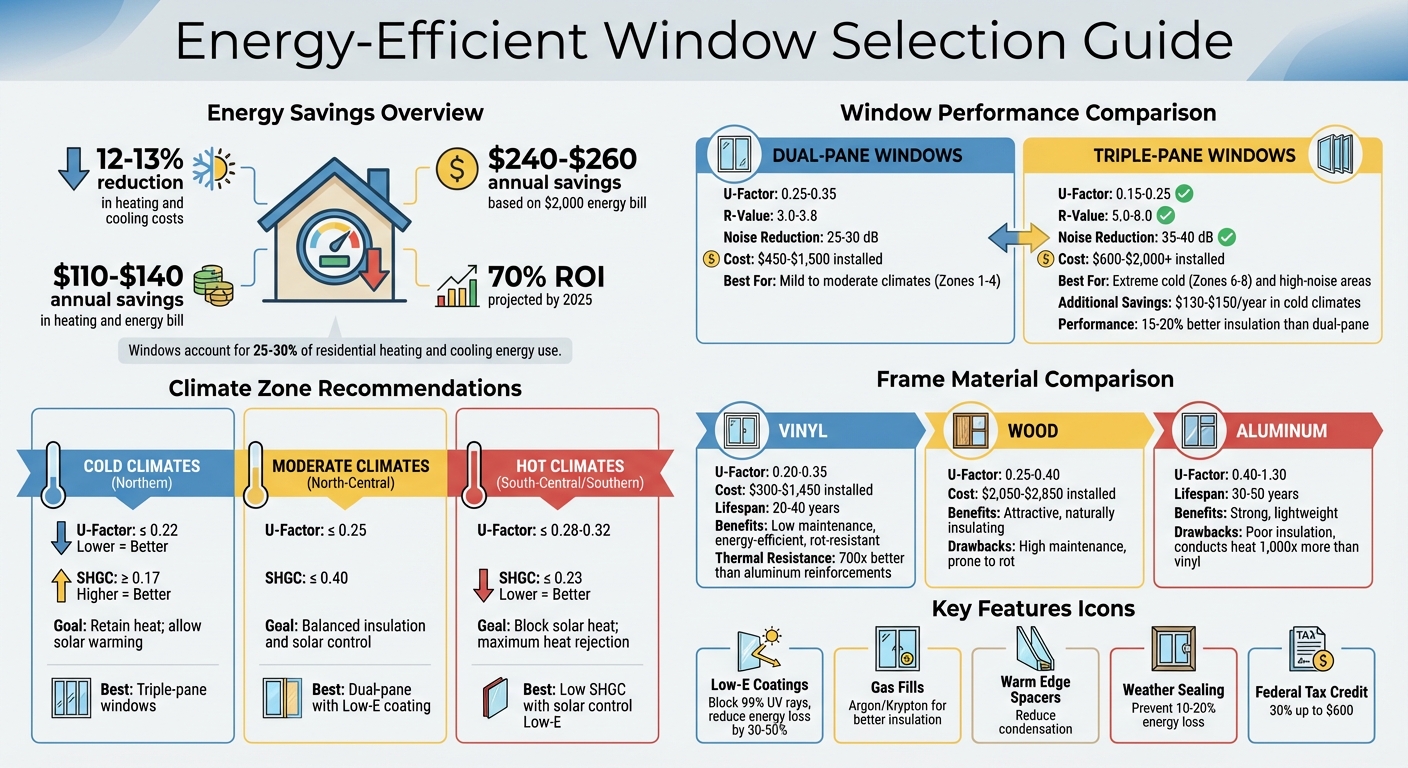
Energy-Efficient Window Selection Guide by Climate Zone
Assess Your Home’s Climate and Requirements
Before purchasing windows, take a close look at your local climate and how your home is oriented. Virginia and North Carolina are spread across multiple climate zones, meaning what works for a home in Richmond might not be ideal for one in Wilmington. According to the ENERGY STAR program, these states fall into the North-Central and Southern zones, each with its own set of performance standards.
Regional Climate Factors
Virginia and central North Carolina experience hot, sticky summers and chilly winters, which means your windows need to handle both extremes. In Richmond, for example, windows should have a U-Factor of ≤ 0.25 and an SHGC (Solar Heat Gain Coefficient) of ≤ 0.40 to manage the wide temperature swings. Farther south, in places like Charlotte or Wilmington, the focus shifts toward reducing solar heat, with SHGC recommendations dropping to ≤ 0.23.
Coastal areas like Wilmington present their own challenges, including salt spray, high humidity, and hurricane-level winds. Atlantic Glass advises:
In southeastern North Carolina, stick to strong, durable frame materials like vinyl, fiberglass, or aluminum that can withstand harsh coastal conditions.
Windows in these areas should also feature corrosion-resistant frames and high condensation resistance to combat moisture damage and the risk of mold.
Home-Specific Requirements
Beyond regional climate, your home’s layout and orientation also play a big role in determining the right windows. South- and west-facing windows bear the brunt of intense sunlight, especially during summer afternoons. For these spots, choose glass with a lower SHGC to keep your air conditioning from working overtime. On the other hand, north-facing windows get little direct sunlight, making a low U-Factor more important to minimize drafts and winter heat loss.
To check for air leaks, try holding a lit candle or incense stick near the window frame on a windy day – if the smoke moves, you’ve got a leak. Casement or awning windows can provide a tighter seal compared to double-hung or sliding styles. Keep in mind, even the most efficient windows won’t perform well without proper insulation and air sealing around the frame.
Understanding U-Factor and SHGC Ratings
Understanding U-Factor and SHGC ratings can help you pick windows that align with your home’s energy needs. These ratings, standardized by the National Fenestration Rating Council (NFRC), give you a clear picture of how a window performs. They’re prominently displayed on the NFRC label, making it easier to compare options. Let’s break down what these ratings mean and how they impact your home.
U-Factor Explained
U-Factor measures how well a window retains heat. It’s expressed as the rate of heat loss in British Thermal Units (BTUs) per hour, per square foot, per degree Fahrenheit (Btu/h·ft²·°F). Unlike some measurements that focus only on the glass, U-Factor evaluates the entire window unit – glass, frame, and spacer materials.
Typically, U-Factor ratings range from 0.20 to 1.20, though some scales extend up to 2.00. Lower U-Factor numbers mean better insulation. If you live in a colder area, a U-Factor between 0.20 and 0.30 is ideal to minimize heating costs and reduce strain on your HVAC system. In warmer climates, a slightly higher U-Factor – up to 0.60 – may still perform well.
SHGC Explained
Solar Heat Gain Coefficient (SHGC) measures how much solar radiation enters through your window and becomes heat inside your home. The rating ranges from 0 to 1; for example, an SHGC of 0.40 means 40% of solar heat passes through. Lower SHGC values block more heat, while higher values allow more warmth in.
In hot climates, an SHGC below 0.30 can reduce cooling costs. In colder regions, an SHGC between 0.30 and 0.60 can help take advantage of passive solar heating. Tailoring SHGC to your needs is crucial. For instance, windows facing south or west often benefit from lower SHGC ratings to block intense afternoon sun, no matter the climate.
| Climate Type | Recommended U-Factor | Recommended SHGC |
|---|---|---|
| Cold | 0.20–0.30 | 0.30–0.60+ (higher for solar gain) |
| Moderate/Mixed | 0.30–0.40 | 0.35–0.50 |
| Hot/Southern | 0.30–0.60 | 0.20–0.35 (lower to block heat) |
While ENERGY STAR certification is a useful guideline, some high-performance vinyl windows may surpass these benchmarks without carrying the label, often to avoid certification fees. To make an informed decision, always check the U-Factor and SHGC numbers on the NFRC label instead of relying solely on marketing claims.
Window Frame Materials: Vinyl Frame Advantages
The type of frame material you choose plays a big role in your window’s energy performance. Vinyl frames stand out for their natural insulation properties, durability, and affordability, making them a popular option for homeowners focused on energy efficiency.
Comparing Vinyl to Other Frame Materials
Vinyl, also known as uPVC, is naturally resistant to heat transfer, giving it a clear edge over materials like aluminum. For perspective, aluminum conducts heat roughly 1,000 times more efficiently than vinyl. Modern vinyl frames take this a step further with multi-chambered designs that trap air, improving insulation. These designs can achieve U-factors between 0.20 and 0.25, which is 40% to 50% better than standard window technology. Some high-end vinyl frames even enhance insulation by filling these chambers with polyurethane foam.
Here’s a quick comparison of popular frame materials:
| Material | Benefits | Drawbacks |
|---|---|---|
| Vinyl | Durable, low-maintenance, energy-efficient (U-factor 0.20–0.35), resists rot and insects, no painting required | Fewer color options compared to wood |
| Wood | Attractive, naturally insulating (U-factor 0.25–0.40) | High maintenance, prone to rot and warping, expensive ($2,050–$2,850 installed) |
| Aluminum | Strong, lightweight, long lifespan (30–50 years) | Poor insulation (U-factor 0.40–1.30), prone to condensation, needs thermal breaks |
Cost is another area where vinyl shines. Installed vinyl windows typically range from $300 to $1,450, making them 20% to 40% cheaper than wood or fiberglass alternatives, all while delivering comparable or superior thermal performance. Unlike wood, vinyl doesn’t need sanding, painting, or staining, which helps maintain a tight seal and prevents energy loss over time. With proper care, vinyl windows can last 20 to 40 years. And thanks to advancements in construction, their performance continues to improve.
Vinyl Windows Co Frame Technology
Vinyl Windows Co utilizes cutting-edge technology to optimize frame performance. Their reinforced designs feature internal supports that offer 700 times better thermal resistance compared to traditional aluminum reinforcements. This innovation keeps frames warmer in winter and cooler in summer, reducing condensation and improving indoor comfort.
Additionally, precision-welded corners ensure airtight seals, minimizing air leakage. The fusion-welding process not only boosts energy efficiency but also strengthens the frame, enabling it to support larger glass panes without compromising performance. Advanced weatherstripping, including barrier fin and bulb seals, further shields against air, water, dust, and noise infiltration. Together, these features align with the high energy efficiency standards discussed earlier.
Insulated Glass Options
High-performance insulated glass units (IGUs) are designed to improve energy efficiency by using multiple sealed panes and insulating gas fills. This setup significantly reduces heat transfer compared to single-pane windows. Choosing between dual-pane and triple-pane glass depends on factors like your climate, budget, and desired performance. Let’s take a closer look at how these two options stack up in terms of performance and cost.
Dual-Pane vs. Triple-Pane Glass
Dual-pane windows consist of two glass layers separated by an insulating gap, while triple-pane windows add an extra glass layer and gap, creating five layers of insulation. This extra layer makes a big difference in thermal performance. Triple-pane windows achieve U-factors of 0.15 to 0.25 and R-values of 5.0 to 8.0, compared to the 0.25 to 0.35 U-factor and 3.0 to 3.8 R-value range for dual-pane windows. This means triple-pane windows offer 15% to 20% better insulation .
In colder climates like Minneapolis (Zone 6), triple-pane windows can provide additional savings of $130 to $150 per year on energy bills compared to dual-pane units. They’re also great for soundproofing, reducing noise by 35 to 40 decibels versus 25 to 30 decibels for dual-pane windows – about 30% better noise reduction. However, these benefits come with trade-offs. Triple-pane windows are 50% to 75% heavier and cost 15% to 30% more, with installed prices ranging from $600 to $2,000+ compared to $450 to $1,500 for dual-pane windows .
| Glass Type | U-Factor | R-Value | Noise Reduction | Best For | Installed Cost |
|---|---|---|---|---|---|
| Dual-Pane | 0.25–0.35 | 3.0–3.8 | 25–30 dB | Mild to moderate climates (Zones 1–4) | $450–$1,500 |
| Triple-Pane | 0.15–0.25 | 5.0–8.0 | 35–40 dB | Extreme cold (Zones 6–8) and high-noise areas | $600–$2,000+ |
“The comfort improvements often justify triple pane even when the energy savings don’t.” – MyHomeQuoter
For most homeowners, dual-pane windows strike a good balance between cost and performance. Triple-pane windows, however, shine in specific scenarios, such as north-facing walls where heat loss is higher or bedrooms where quiet and comfort are priorities . The payback period for upgrading to triple-pane windows typically ranges from 10 to 20 years, depending on energy costs .
Gas Fills and Spacer Systems
The insulating performance of IGUs isn’t just about the number of panes – it also depends on the gas fills and spacer systems used. The spaces between panes are filled with inert gases like argon or krypton, which are denser than air and help minimize heat transfer . Argon is the most common choice, offering excellent insulation for typical 1/2-inch gaps. On the other hand, krypton is even denser and works better in the narrower 1/4-inch gaps often found in triple-pane windows, though it comes at a higher cost .
Spacer systems play a key role in keeping the panes separated and maintaining the gas seal. Traditional aluminum spacers, while sturdy, conduct heat quickly, leading to cold spots and condensation at the window edges. Modern “warm edge” spacers, made from materials like silicone foam or hybrid polymers, act as thermal barriers, reducing heat transfer and preventing moisture buildup .
If you notice fogging or moisture between the panes, it’s likely a sign that the seal has failed, allowing the insulating gas to escape. In such cases, replacing the window is necessary.
Low-E Coatings and Weather Sealing
When it comes to improving window energy efficiency, two key technologies take center stage: Low-E coatings and weather sealing systems. Together, they tackle the main ways energy escapes – through the glass itself and air leaks around the frame. Since windows account for 25% to 30% of residential heating and cooling energy use, addressing these issues can significantly impact your energy bills. While improving glass performance is essential, ensuring a tight seal around the window is just as important.
Low-E Coatings
Low-emissivity (Low-E) coatings are ultra-thin, transparent metallic layers applied to window glass. These coatings reflect infrared heat while allowing visible light to pass through. In winter, they help retain indoor heat, and in summer, they block outdoor solar heat, cutting heating and cooling costs by 20% to 30% compared to standard glass.
There are two main types of Low-E coatings:
- Hard coat (pyrolytic): Applied to molten glass, creating a durable layer fused to the surface.
- Soft coat (sputtered): Applied in a vacuum chamber at room temperature, offering better thermal performance and UV protection. However, these must be sealed within insulated glass units.
High-quality Low-E coatings can block up to 99% of ultraviolet radiation, protecting your furniture and interior finishes from fading.
The choice of Low-E coating depends largely on climate:
- Cold climates: Passive Low-E coatings allow some solar heat gain to help warm your home while reducing heat loss.
- Hot climates: Solar Control Low-E coatings (also known as spectrally selective coatings) filter out 40% to 70% of solar heat while still letting in plenty of daylight.
Although Low-E coatings can increase window costs by 10% to 15%, they can cut energy loss by as much as 30% to 50%.
| Climate Zone | Recommended U-Factor | Recommended SHGC | Coating Goal |
|---|---|---|---|
| Northern | ≤ 0.22 | ≥ 0.17 | Retain heat; allow solar warming |
| North-Central | ≤ 0.25 | ≤ 0.40 | Balanced insulation and solar control |
| South-Central | ≤ 0.28 | ≤ 0.23 | Block solar heat; moderate insulation |
| Southern | ≤ 0.32 | ≤ 0.23 | Maximum solar heat rejection |
Next, let’s look at how advanced weather sealing works hand-in-hand with Low-E coatings to enhance overall window efficiency.
Weather Sealing Technology
Even the best glass technology won’t perform well if air leaks around the window frame. Effective weather sealing – using high-quality rubber gaskets and multi-chambered vinyl frames – can prevent energy losses of 10% to 20%.
The window design also matters. Casement, awning, and hopper windows use compression seals that press the sash tightly against the frame, making them better at blocking drafts compared to the sliding seals in double-hung or sliding windows. For example, Vinyl Windows Co integrates advanced weather sealing into its products, including triple weatherstripping and precision-welded corners, to reduce drafts and improve energy efficiency.
When shopping for windows, look for an NFRC air infiltration rating of 0.3 or lower. High-performance windows can achieve ratings below 0.05 cfm/ft². Regular maintenance, like replacing worn weatherstripping or caulking, is a simple and cost-effective way to maintain energy efficiency without replacing the entire window. Proper installation techniques – such as using caulking, flashing, and weatherstripping – are also crucial to avoid losing 10% to 15% of the window’s efficiency.
How to Select Vinyl Design Systems
Picking the right energy-efficient windows starts with a personalized consultation. Vinyl Windows Co works through an exclusive network of authorized local dealers, ensuring you’ll have expert guidance from the initial assessment to the final installation. This hands-on approach guarantees that your windows are tailored to your home’s unique needs and local climate.
Consultation and Home Assessment
The process begins by scheduling a free in-home consultation with a Vinyl Design dealer, which you can arrange online or by phone. Before the visit, make sure your windows are easily accessible. During the consultation, the specialist will inspect your current windows, identify potential issues like wood rot or structural damage, and take precise measurements. This is also the perfect opportunity to outline your goals – whether that’s improving energy efficiency, reducing noise from a busy street, or updating your home’s look.
Make sure the recommended windows meet your performance and aesthetic criteria. If you’re part of a homeowners association, check for any restrictions on materials, colors, or grid patterns before the consultation. After the assessment, you’ll receive a detailed quote outlining material and labor costs, warranty details, and estimated timelines. Be sure to ask about financing options and whether certain models qualify for federal energy tax credits. This step ensures you’re set up to choose windows that balance both functionality and style.
Window Customization Options
Vinyl Design provides a wide range of customization options to suit your home’s architectural style and energy needs. Choose from various window styles, including casement, double-hung, awning, sliding, picture, and bay windows, to match either modern or traditional designs. Frame colors range from classic white and tan to contemporary shades like black, bronze, and silver, with optional woodgrain laminates for added warmth.
For enhanced energy efficiency, you can select double or triple-pane glass, gas fills like argon or krypton, and Low-E coatings tailored to your climate zone. Add a personal touch with hardware finishes and grille patterns, such as Colonial, Prairie, or Diamond designs. Dual-color options allow you to coordinate different interior and exterior finishes to complement both your siding and interior decor. Specialized glass types are also available – tempered glass for safety in children’s rooms, frosted glass for privacy in bathrooms, or acoustic glass to reduce noise. Modern vinyl windows typically last 20 to 40 years and can lower heating and cooling costs by 20% to 30% compared to older models. Once you’ve finalized your choices, professional installation ensures these features deliver maximum energy savings.
Professional Installation
Proper installation is the key to unlocking the energy savings these windows offer. Even top-tier windows won’t perform as expected if they aren’t installed correctly. In fact, improper installation accounts for up to 60% of window performance issues. That’s why Vinyl Windows Co relies on certified professionals for every job.
The installation process starts with precise measurements, careful removal of old windows, and an inspection of the opening for any damage. Once the opening is prepped, the new window is leveled, securely installed, and sealed with caulk and insulation to prevent air leaks.
After installation, confirm that the windows are properly sealed and that weep holes are clear to avoid water buildup. Certified installers not only ensure the job is done right but also help protect your warranty.
Switching from single-pane windows to energy-efficient vinyl alternatives can save homeowners between $126 and $465 annually on heating costs, making professional installation a smart investment.
Conclusion
Selecting energy-efficient windows means matching the right features to your home’s climate. In colder regions, look for a U-factor of 0.30 or below, along with triple-pane glass and inert gas fills for better insulation. For warmer areas, focus on windows with a low SHGC (0.27 or below) to reduce solar heat gain, paired with Low-E coatings that reflect sunlight. If you live in a mixed climate, aim for windows that balance both U-factor and SHGC to handle varying seasonal needs.
On average, upgrading to energy-efficient windows can save homeowners 13% on energy bills annually. Vinyl frames are particularly effective, offering excellent thermal resistance with multi-chambered designs that achieve U-factors as low as 0.20 to 0.25.
“Heat gain and heat loss through windows are responsible for 25%–30% of residential heating and cooling energy use.” – U.S. Department of Energy
These windows don’t just save energy – they improve your daily life. By reducing drafts, blocking noise, and protecting interiors from UV damage, energy-efficient windows make your home more comfortable. Low-E coatings, for instance, can block up to 99% of harmful UV rays, helping your furniture and décor stay vibrant for years.
Vinyl Windows Co’s expertly designed window systems offer tailored solutions and professional installation, ensuring you start saving energy from day one.
FAQs
What U-Factor and SHGC should I choose for my zip code?
For areas with hot climates (zones 0-3), it’s best to select windows with a U-Factor of 0.25 or lower and a Solar Heat Gain Coefficient (SHGC) between 0.27 and 0.30. If you’re in colder climates, look for windows with a U-Factor ranging from 0.20 to 0.27. Since recommendations can vary based on your specific climate zone, check local guidelines to ensure your windows are optimized for energy efficiency.
Is triple-pane worth it over dual-pane for my home?
Triple-pane windows can be a smart choice, but whether they’re worth it depends on a few factors: your climate, budget, and energy-saving goals. These windows offer 15–20% better insulation compared to dual-pane options, which can help lower heating and cooling costs, especially in colder regions. However, they come with a 25–40% higher upfront cost.
If you live in an area with harsh winters, the added insulation might make them a worthwhile investment. On the other hand, for milder climates, dual-pane windows often strike a better balance between cost and efficiency. Weigh your specific needs and local weather conditions before making a decision.
How can I tell if my windows are leaking air?
To find air leaks around your windows, start by checking for drafts near edges, especially around weatherstripping and meeting rails. A simple trick is to hold a lit candle or an incense stick close to the frame – if the flame flickers or the smoke shifts, you’ve got a leak.
For a more thorough check, close all windows and doors, then turn on exhaust fans to create negative pressure inside your home. This can make leaks easier to detect. For the most accurate results, consider a blower door test, which professionals can perform if you need advanced testing.


