

If your windows are drafty, foggy, hard to open, or causing higher energy bills, it might be time for a replacement. Windows play a big role in your home’s comfort, energy costs, and overall value. Old or damaged windows can lead to energy loss, structural issues, and even safety risks. Here are the key signs to watch for:
- Drafts or air leaks around frames, causing energy loss.
- Condensation or fog between glass panes, indicating seal failure.
- Sticking or hard-to-operate windows, often due to warped frames or damaged hardware.
- Rising energy bills, with windows accounting for up to 30% of heating and cooling costs.
- Cracked frames or rot, which can weaken your home’s structure.
- Excessive noise from outside, signaling poor insulation.
- Faded furniture or flooring, caused by UV rays passing through outdated glass.
Replacing old windows with modern, energy-efficient vinyl windows can save $101–$583 annually, cut outside noise by 50%, and block 75% of UV rays. Plus, new windows improve your home’s value, with an average return of 68% on the cost. Look how beautiful this sunroom is or this new patio window door; it certainly added value to the home. Don’t wait for problems to worsen – address these signs early to improve comfort, safety, and efficiency.
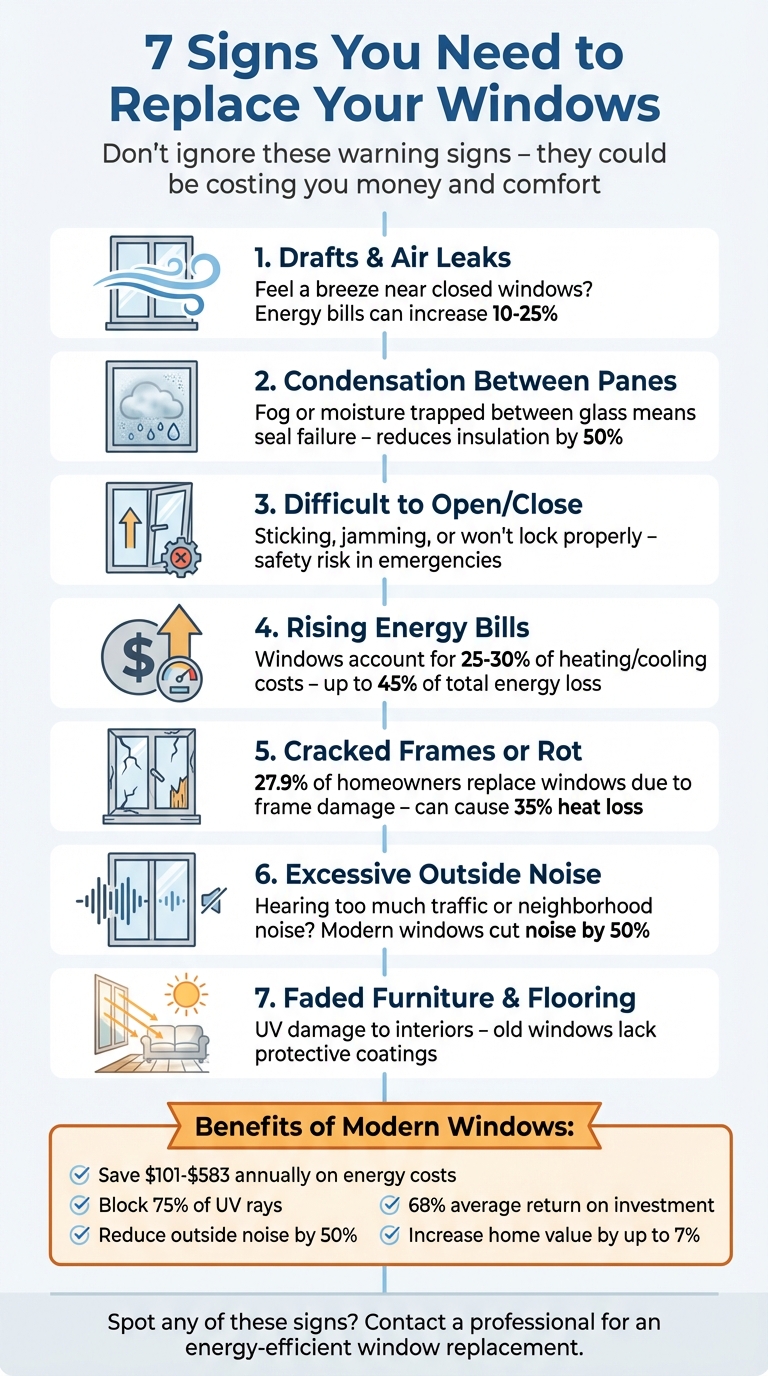
7 Warning Signs You Need to Replace Your Home Windows
1. Drafts and Air Leaks Around Window Frames
Energy Efficiency
If you feel a breeze near your closed windows, it’s likely a sign that the airtight seal has been compromised. When outside air sneaks in and your conditioned air escapes, your HVAC system has to work harder to keep your home comfortable. This can lead to a noticeable increase in your energy bills – sometimes by as much as 10–25%, depending on your local climate.
You might also notice cold spots near exterior walls or find that outdoor allergens, like pollen, are slipping inside more easily. This can make seasonal allergies worse. To check for drafts, try holding a lit candle or stick of incense near the closed window on a windy day. If the flame flickers or smoke moves erratically, you’ve likely found a leak. Another method is to shine a flashlight around the edges of the window at night – if light escapes through the gaps, it’s time to address the issue. Persistent energy loss could even point to deeper structural problems.
Structural Integrity
Drafts can sometimes hint at more serious structural concerns. For example, if your window frames feel soft or spongy, it might mean moisture has seeped in and caused the wood to rot. Temperature fluctuations or foundation shifts can also lead to warped frames, which often can’t be fixed with just caulk or weatherstripping. In such cases, a full window replacement may be necessary. Dan Simms, a contributing writer at Angi, explains:
“If you’ve caulked your windows and installed weatherstripping but are still experiencing draftiness, it might be time for a total window replacement”.
Take a close look at the edges of your windows. Cracked or peeling caulk, visible gaps where light shines through, or bubbling paint caused by water damage are all warning signs that the seal has failed and the frame may be compromised. Addressing these issues promptly can help prevent further damage and maintain your home’s comfort and efficiency.
sbb-itb-a4eb837
2. Condensation or Fog Between Glass Panes
If you notice condensation or fog trapped between the glass panes of your windows, it’s more than just an eyesore – it’s a sign of deeper problems that can affect your home’s comfort, energy efficiency, and even structural integrity. It may be time to review new window brands.
Energy Efficiency
When condensation or a cloudy haze appears between glass panes, it usually means the airtight seal of your insulated glass unit (IGU) has failed. This failure is often caused by thermal pumping, a process where daily temperature fluctuations create tiny fractures in the seal. These fractures allow insulating gases like argon or krypton to escape and let moist air seep in.
A broken seal can reduce your window’s insulating power by as much as 50%, putting extra strain on your HVAC system. Upgrading to ENERGY STAR-certified windows can help mitigate this problem, potentially saving you anywhere from $101 to $583 annually on energy costs.
Structural Integrity
Condensation between panes doesn’t just affect energy efficiency; it can also point to structural damage. Trapped moisture can corrode the metal spacers and fasteners in the window assembly. Over time, it may even carve grooves into the glass, a process known as “riverbedding”. White, hazy deposits on the glass are a telltale sign of eroded silica from desiccant pellets, indicating the window is beyond repair.
If moisture spreads to the window frame, it can lead to more serious issues like rot. Signs include soft or spongy wood, peeling paint, or water stains around the sill. You can test for rot by pressing your finger into the frame – if it feels soft, the damage likely extends beyond the glass, and a full window replacement may be necessary.
Aesthetic Appeal
Fogged windows don’t just hurt your home’s functionality – they also take a toll on its appearance. They obscure your view and can make your home look poorly maintained. Persistent moisture can even damage window finishes and lower your property’s resale value. Replacing outdated windows with modern alternatives restores clarity and can protect your interiors by blocking up to 75% of UV rays.
3. Windows That Stick or Won’t Open and Close Properly
Struggling to open or close your windows? That’s often a sign that something’s not right. Smooth operation is a basic expectation for any window. When they stick, jam, or refuse to move, it often points to problems with the frame, alignment, or mechanisms.
Ease of Operation
If opening or closing a window feels like a workout, there’s likely an underlying issue. Wooden frames can swell when exposed to moisture, while vinyl frames may warp in extreme heat, throwing the alignment off. Over time, everyday wear and tear can take a toll – hardware might rust, tracks can collect debris, and friction builds up, causing the sash to stick.
Beyond being a daily annoyance, stuck windows can pose a safety risk. In emergencies, a window that’s hard to open could delay a quick exit when every second counts. It’s also wise to check window locks regularly. Misaligned locks often indicate frame warping. For wooden windows, a quick “finger test” on the sill can reveal rot – if it feels soft or spongy, it’s time to act. These operational hiccups don’t just make life harder; they can also disrupt energy efficiency.
Energy Efficiency
Windows that don’t close properly can’t form a tight seal, which means drafts can sneak in and your home’s energy efficiency takes a hit. In fact, heat gain and loss through windows account for 25% to 30% of the energy used for heating and cooling in a home. Replacing old windows with modern, energy-efficient ones can lead to real savings – around 13% off annual energy bills. Depending on your location and energy usage, this could mean saving anywhere from $101 to $583 a year.
Structural Integrity
Sticking windows might also hint at bigger structural problems. If your home’s foundation shifts or settles, window frames can move out of alignment, making them tough to operate or lock securely. Older windows often come with a host of issues, and at a certain point, replacing them becomes more practical – and cost-effective – than constant repairs. Whether it’s about energy efficiency, safety, or structural concerns, addressing window problems promptly is key to keeping your home in top shape.
4. Higher Energy Bills
If your heating and cooling expenses seem to keep climbing, your windows might be to blame. Even though windows make up only about 8% of your home’s exterior, they can be responsible for up to 45% of total energy loss. Here’s a closer look at how outdated windows affect your home’s energy efficiency.
Energy Efficiency
Inefficient windows do more than just let drafts and condensation in – they can significantly increase your energy bills. Older windows make your HVAC system work harder, leading to higher utility costs. For instance, single-pane windows, often found in older homes, lack modern coatings that block solar heat during summer and provide little insulation during winter. On top of that, when seals in double or triple-pane windows fail, insulating gases like argon can escape, reducing their efficiency by up to 50%.
“While windows only take up approximately 8% of the surface of your home’s exterior, they account for about 45% of the heat gain or loss – meaning window performance can have a big impact on the comfort and efficiency of your home.”
– Doug Anderson, ENERGY STAR Certified Products
Upgrading to ENERGY STAR-certified windows can help lower your energy bills. These modern windows often feature Low-E coatings and argon gas fills, which improve insulation and reduce heat loss. A simple draft test using a lit incense stick can help you identify air leaks around your windows.
Inefficient windows not only increase energy costs but also put extra strain on your HVAC system, potentially shortening its lifespan. To improve energy efficiency, look for windows with a U-factor of 0.30 or lower and a Solar Heat Gain Coefficient (SHGC) that suits your climate zone. Investing in the right windows can make a noticeable difference in both comfort and cost.
5. Cracked Frames, Rot, or Physical Damage
Issues like drafts and foggy glass are concerning, but damaged window frames can pose a more serious threat to your home’s structure and energy efficiency. Cracked or rotting frames aren’t just an eyesore – they can lead to structural problems and higher energy costs. In fact, a 2025 windows survey found that 27.9% of homeowners replaced their windows due to cracked, damaged, or broken frames or sills. Here’s why addressing physical damage is so important for your windows.
Structural Integrity
Window frames are more than just a border for glass – they help support your home’s walls. When frames crack or rot, they can allow water to seep in, which weakens wall support and may even indicate foundation problems. For example, diagonal cracks starting at the top corners of a window, especially those wider than 1/10 inch, could point to serious structural issues requiring professional attention. If a crack grows wider than 5mm or continues to expand, it’s time to call a structural expert. Fixing damaged frames promptly can save you from costly structural repairs and help maintain your home’s stability.
Energy Efficiency
Damaged frames can compromise the seals around your windows, leading to air leaks and the loss of insulating gases. These issues can contribute to as much as 35% of a home’s heat loss. A quick way to check for rot is the finger test – press on the wood. If it feels soft or spongy, the rot is advanced, and replacement is necessary. Another method is the flashlight test: at night, have someone shine a flashlight along the window frame from inside while you stand outside. If you see light coming through, it indicates a significant air leak. Replacing damaged frames can restore energy efficiency and reduce the strain on your heating and cooling systems.
Aesthetic Appeal
Beyond structural and energy concerns, damaged frames can hurt your home’s curb appeal. Signs like water stains, peeling paint, and cracked frames make your home look neglected and can reduce its value. The type of frame material affects how damage appears, as shown in the table below:
| Window Frame Material | Estimated Lifespan | Common Damage Signs |
|---|---|---|
| Wood | 15–30 years | Rot, sponginess, peeling paint, swelling |
| Aluminum | 15–30 years | Corrosion, rusting, chipping, crumbling |
| Vinyl | 20–40 years | Warping, bowing, discoloration |
| Fiberglass | 30–50 years | Cracking, seal failure |
Replacing a single window costs about $554 on average, while replacing 5–6 windows typically runs around $3,045. By addressing frame damage early, you can avoid more extensive repairs, improve your home’s appearance, and maintain its value. There’s a lot of different options to choose from, single pane, double and triple pane, among many others. If you need help selecting your new windows, don’t hesitate to reach out.
6. Too Much Outside Noise Coming Through
If you’re frequently hearing traffic, sirens, or other neighborhood sounds inside your home, it might mean your windows are no longer doing their job. Excessive outdoor noise suggests that your windows aren’t effectively insulating against sound or air leaks. Modern double- and triple-pane windows can cut outside noise by as much as 50% compared to older designs. This improvement not only enhances peace and quiet but also boosts overall comfort inside your home.
Energy Efficiency
Today’s windows are designed with advanced features like multiple panes, argon gas fills, and Low-E coatings, all of which help reduce both sound and heat transfer. When windows allow air to leak, they also let your indoor temperatures fluctuate, making your HVAC system work harder. In fact, heat gain and loss through windows account for 25%–30% of energy use for heating and cooling in homes. By switching to energy-efficient windows, you could save an average of 13% on your annual utility bills, while also enjoying a quieter and more comfortable living environment.
The condition of your windows plays a big role in how well they block sound and maintain energy efficiency.
Structural Integrity
When windows let in too much noise, it often points to underlying structural issues. Problems like warped frames, cracked seals, or wood rot create gaps that allow sound waves to pass through easily.
To check for compromised seals, try a simple smoke test on a windy day: hold a lit incense stick near the window frame and watch for any wavering smoke. If the smoke moves, it’s a sign that the seal is failing. Damaged seals and weatherstripping not only weaken soundproofing but also reduce insulation, making window replacement a necessary step to restore both comfort and efficiency.
7. Dated Look or Faded Furniture and Flooring
If your hardwood floors, rugs, or furniture show signs of fading or discoloration, your windows might be the culprit. Older single-pane windows often lack protective coatings, allowing excessive UV rays to penetrate and cause fading, cracking, or other damage over time.
Energy Efficiency
Modern replacement windows come equipped with Low-E (low-emissivity) glass, which features a microscopic metallic coating designed to block harmful UV rays and reduce solar heat. For instance, ENERGY STAR®-certified windows can block up to 75% of UV rays and reduce energy loss by 30% to 50%. This not only protects your furnishings but also makes your home more energy-efficient. Plus, these advancements in window technology can enhance your home’s overall appearance.
Aesthetic Appeal
New windows can do wonders for your home’s look. Outdated windows with worn frames or old-fashioned designs can hurt your home’s curb appeal and even its value. Modern replacement windows offer customization options like various colors, grid patterns, and sleek designs that can give your home a more unified and updated style. Beyond aesthetics, these upgrades can also be financially rewarding. For example, installing replacement vinyl windows can boost a home’s value by an average of $13,766, with homeowners typically recouping 68% of their investment.
Highlighting new windows in a property listing can also be a major selling point, attracting buyers eager to avoid renovation costs and enjoy a move-in-ready home.
Why Replace Your Windows
Replacing your windows isn’t just about aesthetics or fixing drafts – it’s a smart financial and practical decision. For instance, upgrading from single-pane windows to energy-efficient models can save homeowners an average of 13% on annual energy bills. With ENERGY STAR-certified windows, those savings typically range from $101 to $583 per year on heating and cooling costs.
Traditional wood frames may look classic, but they demand constant upkeep, like painting and sealing, and are vulnerable to rot and swelling. On the other hand, modern materials like vinyl and fiberglass are designed to resist moisture and eliminate the need for refinishing. These frames can last 20 to 40 years, making them a long-term, low-maintenance choice.
Beyond energy efficiency, modern windows offer other perks. Low-E coatings, for example, block up to 75% of harmful UV rays. This means less fading for your furniture, carpets, and curtains. Plus, double- and triple-pane windows help reduce exterior noise by up to 50%, making your home quieter and more comfortable.
Replacing your windows can also increase your home’s value. On average, homeowners recoup about 68% of the cost of replacement windows when selling their home. Improved curb appeal can even boost your home’s value by up to 7%.
To get the most out of your investment, explore Federal Tax Credits for ENERGY STAR “Most Efficient” products and check with local utilities for rebates. If you’re replacing multiple windows, consider doing 8–12 at once to secure better pricing from contractors. Finally, look for the National Fenestration Rating Council (NFRC) label to compare performance metrics and choose windows suited for your climate zone.
Conclusion
Windows are responsible for 25%–30% of your home’s heating and cooling energy use. If you’re noticing drafts, condensation between panes, trouble opening or closing, rising energy bills, visible damage, excessive noise, or faded furniture, these are strong indicators it might be time for a replacement.
Putting off window replacement can lead to safety risks and higher costs down the road. For instance, windows that don’t open properly can be a serious hazard during emergencies, while damaged or weakened frames can make your home more vulnerable to break-ins. In fact, about 23% of home burglaries happen through a first-floor window. On top of that, drafty windows force your HVAC system to work harder, which not only increases energy bills but can also reduce the lifespan of your heating and cooling equipment.
Getting modern, energy-efficient windows professionally installed can make a big difference. These windows help lower energy costs, improve comfort, minimize noise, and protect your furniture from fading. Plus, they can enhance your home’s curb appeal and resale value – homeowners typically recoup around 68% of the replacement costs when selling.
Don’t wait for energy bills to climb or damage to worsen. If you spot any of these seven warning signs, reach out to a qualified professional right away. Upgrading your windows now means a safer, more comfortable, and more valuable home.
FAQs
Should I repair or replace my windows?
The choice between repairing or replacing your windows depends on their age, condition, and how well they perform. Replacement is the way to go if your windows have cracks, warping, persistent fogging, drafts, or if previous repairs haven’t boosted energy efficiency. On the other hand, repair might work for newer windows (less than 10 years old) dealing with minor issues like faulty hardware or surface-level damage. That said, older windows with extensive wear and tear are often better off being replaced, as this can improve energy efficiency, comfort, and even your home’s overall value.
How can I tell if my window seal has failed?
You might spot a failed window seal if you see condensation trapped between the glass panes – this could look like fog, water droplets, or even frost during colder months. Other clues include feeling drafts near the window, noticing higher energy bills, or struggling to open and close the window smoothly. Tackling these problems quickly can help keep your home energy-efficient and protect your windows from further wear.
Which window ratings should I look for in my climate?
When picking windows that suit your climate, pay close attention to ratings like the U-factor and Solar Heat Gain Coefficient (SHGC). For colder climates, a low U-factor (around 0.15–0.25) helps keep heat inside your home. In warmer areas, a lower SHGC is better since it reduces heat from sunlight. Don’t overlook condensation resistance, especially in humid or temperature-changing environments, to avoid moisture problems. Be sure to check local recommendations to find the right option for your area.


