

Replacing windows in 2026 will cost an average of $1,047 per window, but the price can vary widely based on materials, energy-efficient upgrades, and location. Here’s a quick breakdown:
- Material Costs:
- Vinyl replacement windows: $450–$950 (budget-friendly, durable)
- Wood: $800–$2,600 (higher cost, classic look)
- Fiberglass: $650–$1,100 (durable, low maintenance)
- Energy-Efficient Upgrades:
- Triple-pane glass, Low-E coatings, or argon gas can add $500–$4,000 per window but save up to 31% on energy bills.
- Regional Differences:
- Urban areas: $700–$1,000 per window
- Rural areas: $400–$600
- Coastal zones (hurricane-rated glass): $1,200–$1,500+
- Project Size:
- Small homes (8–10 windows): $6,000–$9,000
- Whole-house (15–25 windows): $10,000–$20,000
- Large estates (30+ windows): $21,000–$35,000+
- Labor Costs: Average $149 per window, higher for complex installations like multi-story homes.
Energy-efficient windows qualified for a 30% federal tax credit (capped at $600 annually) ended on December 31, 2025. For the best savings, consider bundling multiple windows, choosing standard sizes, and scheduling installations during off-peak months.
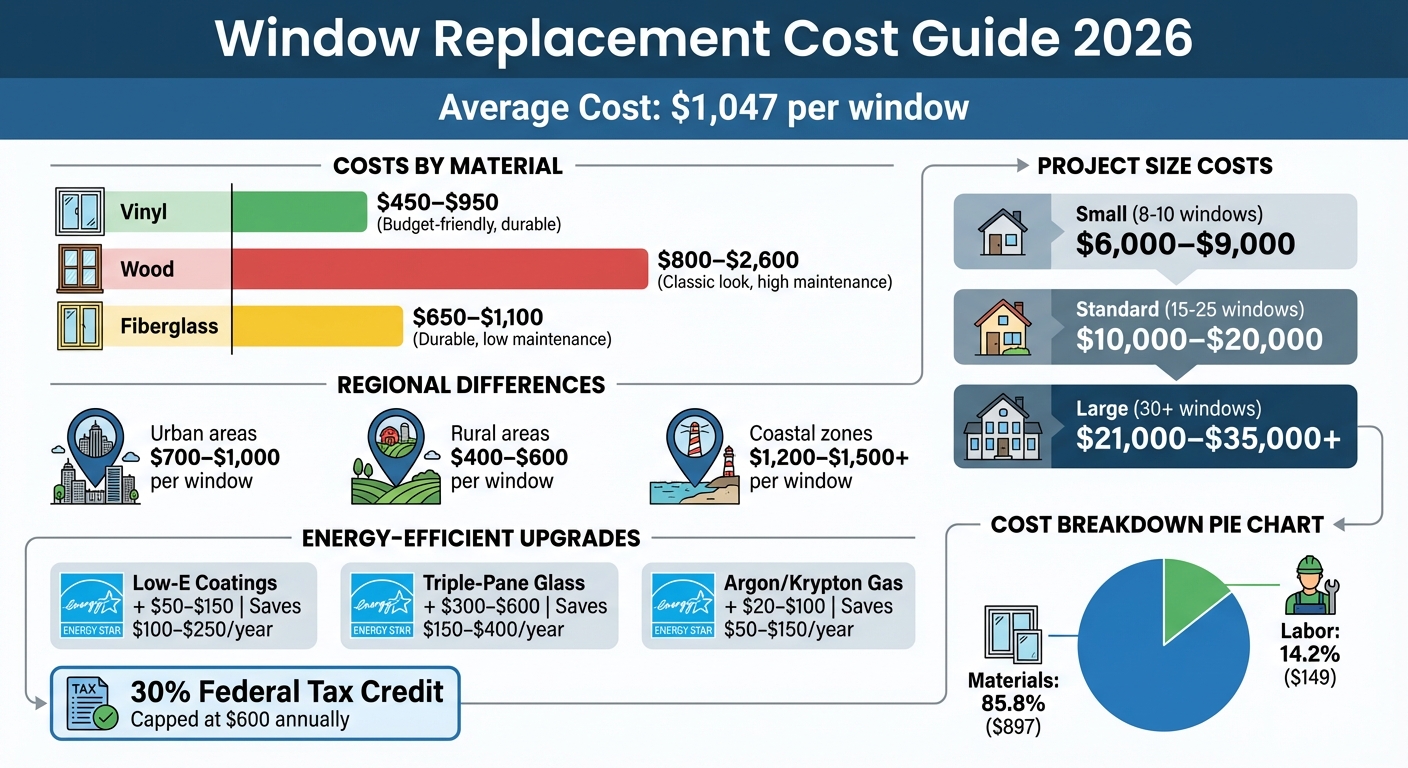
2026 Window Replacement Cost Breakdown by Material, Type, and Project Size
What Window Replacement Costs in 2026
Costs by Project Size
The size of your project plays a big role in determining the total cost of window replacement. The more windows you replace, the lower the cost per window tends to be. This is thanks to bulk discounts, which make replacing all the windows in a house more cost-efficient per unit compared to just swapping out one or two.
For smaller homes or partial replacements involving 8 to 10 windows, you can expect costs to fall between $6,000 and $9,000. Standard whole-house projects, typically involving 15 to 25 windows in a 3- to 4-bedroom home, usually range from $10,000 to $20,000. If you’re dealing with larger properties or estates with 30 or more windows, the price can climb to $21,000 to $35,000 or more, especially if you opt for high-end materials like wood or fiberglass.
| Project Size | Estimated Cost Range | Typical Scope |
|---|---|---|
| 8–10 Windows | $6,000 – $9,000 | Small homes or partial replacements |
| 15–25 Windows | $10,000 – $20,000 | Standard 3-4 bedroom whole-house projects |
| 30+ Windows | $21,000 – $35,000+ | Large estates or premium material upgrades |
This breakdown highlights how the size of your project can shape your budget, setting the stage for understanding broader cost trends across the country.
National Price Averages
Looking at national averages gives a better sense of what to expect on a per-window basis. In 2026, the average cost to replace a single window – including both materials and installation – is $1,047. Materials typically make up the bulk of this expense, accounting for about 85.8% ($897), while labor costs represent the remaining 14.2% ($149) per window. Depending on factors like size, style, and added features, most homeowners spend anywhere from $700 to $1,400 per window.
Regional differences also come into play. For example, in Virginia, the average cost per window is $1,026, with $881 allocated to materials and $145 to labor. Meanwhile, in North Carolina, the average is slightly lower at $1,000, with $857 for materials and $143 for labor. These variations reflect differences in local labor rates and market conditions, though both states remain close to the national average.
sbb-itb-a4eb837
Vinyl Window Costs and Benefits
Vinyl Window Price Ranges
Vinyl windows continue to be one of the most cost-effective options for homeowners in 2026. The total cost for professionally installed vinyl windows typically ranges from $450 to $900 per window, which includes both materials and labor. Material costs alone fall between $100 and $900 per unit, while installation adds $150–$350, with labor accounting for about 30%–45% of the total price.
The price largely depends on the quality tier of the window. Here’s a breakdown:
- Basic builder-grade vinyl windows: $250 to $450 per window
- Mid-range options: $450 to $800 per window
- Premium models with advanced features: $900 to $1,100 or more
To provide some perspective, here’s how vinyl compares to other popular window materials:
| Material | Typical Installed Cost (Per Window) | Lifespan | Maintenance Level |
|---|---|---|---|
| Vinyl | $450–$800 | 15–40 years | Low |
| Aluminum | $500–$1,300+ | 20–25 years | Low/Moderate |
| Fiberglass | $650–$1,100 | High Durability | Low |
| Wood | $900–$1,800+ | ~20 years | High |
Vinyl windows stand out for their affordability, durability, and energy-saving features, making them a strong contender for homeowners looking to balance cost and performance.
Why Choose Vinyl Windows
Vinyl windows offer more than just an attractive price – they bring practical advantages that improve home performance and reduce long-term costs. Unlike wood, vinyl is naturally resistant to moisture, rot, and pests, all without requiring intensive maintenance. Over a 30-year period, vinyl windows cost around $800, compared to $2,200 for wood when factoring in upkeep and energy expenses.
Many modern vinyl windows come equipped with insulated glass filled with argon or krypton gas, as well as weatherproof seals designed to minimize drafts and enhance energy efficiency. These features can lead to monthly utility savings of $25 to $100, with approximately 66% of homeowners reporting such reductions. This makes vinyl windows a practical choice for lowering energy bills while increasing overall savings.
Vinyl windows also deliver a strong return on investment, with resale values offering 67.1% to 76% of the initial cost. Their lifespan of 15 to 40 years ensures decades of reliable performance without the recurring maintenance expenses associated with materials like wood. Additionally, products from companies like Vinyl Windows Co include precision-welded corners, reinforced frames, and lifetime warranties, offering homeowners added reliability and peace of mind.
Costs by Window Type and Style
Common Window Styles and Prices
The type of window you choose directly affects both its price and functionality. For example, single-hung windows are the most affordable option, with installation costs ranging from $173 to $850. However, because only the bottom sash opens, they might limit ventilation and make cleaning more difficult. On the other hand, double-hung windows – priced between $150 and $1,000 – provide better airflow and are easier to clean. These typically cost $200–$300 more than single-hung windows.
If energy efficiency is a priority, casement windows are a strong contender. They cost between $325 and $1,200 and seal tightly when closed, making them highly effective at minimizing air leakage. Sliding windows, which cost $182 to $1,800, are a practical choice for wider spaces but may not seal as tightly as casement designs. Meanwhile, picture windows – priced from $315 to $1,460 – are fixed, eliminating air leaks and offering excellent energy efficiency. However, they don’t provide ventilation, which could be a drawback for some homeowners.
For those looking to enhance both aesthetics and natural light, bay and bow windows are an attractive option, though they come with a higher price tag of $1,125 to $6,140. Their increased cost stems from the additional framing, insulation, and precise alignment required during installation. These windows create bright, open spaces but demand a larger budget for both materials and labor.
“The larger the window and the more complex the design and installation, the higher the price.”
If you’re planning your budget, it’s also important to consider installation costs by window type.
Installation Costs by Window Type
Once you’ve chosen a window style, it’s essential to factor in installation costs, as these can vary significantly depending on the type of window. The table below outlines typical installed price ranges, which include both materials and professional labor:
| Window Style | Typical Installed Cost (Per Window) | Best For Energy Efficiency |
|---|---|---|
| Single-Hung | $173–$850 | Moderate |
| Double-Hung | $150–$1,000 | Good |
| Casement | $325–$1,200 | Excellent |
| Sliding | $182–$1,800 | Moderate |
| Picture (Fixed) | $315–$1,460 | Excellent |
| Bay/Bow | $1,125–$6,140 | Good to Excellent |
Labor costs typically account for 15% to 50% of the total expense. These costs can increase if you’re dealing with second-story installations, custom openings, or structural repairs. To keep expenses under control, stick to standard window sizes whenever possible. Installing multiple windows at once can also help reduce labor costs, as professionals often offer bulk pricing for larger projects.
For those prioritizing energy efficiency, picture windows are ideal for large, uninterrupted views, while casement windows provide excellent ventilation and a tighter seal compared to sliding or hung styles. Both options can help you achieve long-term savings on energy bills.
Energy-Efficient Upgrades and Long-Term Savings
Energy Efficiency Features in 2026
Windows have come a long way in 2026, with the introduction of Energy Star Version 7.0 standards setting new benchmarks. For Northern climates, windows must now have a U-Factor of ≤ 0.22 to qualify – something typically achieved with triple-pane glass. These triple-pane windows use three layers of glass to create two insulating cavities, improving thermal insulation and reducing noise.
Low-E coatings – ultra-thin metal layers – are another key feature. These coatings reflect infrared light, helping to manage heat transfer. In 2026, there are three main types to consider:
- Passive Solar (Hard Coat): Allows some solar heat in, ideal for colder climates.
- Solar Control (Soft Coat): Reflects heat outward, perfect for warmer climates.
- Low-E 366: A premium triple-layer silver coating that blocks 95% of solar heat.
These coatings often pair with insulating gas fills. While argon gas remains the standard for double-pane windows, krypton gas – denser and more effective – is increasingly used in triple-pane designs to achieve ultra-low U-Factors.
Modern windows also feature warm edge spacers, typically made from silicone, foam, or reinforced thermoplastics. These spacers reduce heat conduction at the edges of the glass and minimize condensation issues. Installation methods have also evolved, with professionals now using low-expanding spray foam for airtight seals and flashing tape to block water infiltration. Companies like Vinyl Windows Co offer insulated glass options with advanced weatherproofing to help homeowners meet these new standards.
These advancements make it easier to weigh the upfront costs against the long-term energy savings.
Upfront Costs vs. Energy Savings
Investing in energy-efficient windows may seem costly upfront, but the savings over time can be significant. For example, standard vinyl replacement windows with double-pane glass typically cost $600 to $900 per opening, while high-performance triple-pane windows range from $1,200 to $1,800 per opening. Here’s a breakdown of the costs and potential energy savings for various upgrades:
| Upgrade Feature | Added Upfront Cost (Per Window) | Potential Annual Energy Savings (Whole House) |
|---|---|---|
| Low-E Coatings | $50–$150 | $100–$250 |
| Triple-Pane Glass | $300–$600 | $150–$400 (Climate dependent) |
| Argon/Krypton Gas | $20–$100 | $50–$150 |
| Full-Frame Install w/ Spray Foam | $150–$400 | $50–$100 (Reduced drafts) |
High-performance windows can reduce heating costs by 12% and cooling costs by 28% compared to standard double-pane options. If you’re replacing single-pane windows with Energy Star-certified ones, you could save between $101 and $583 annually. Overall, these upgrades typically cut energy bills by 10% to 30%.
To make these upgrades more affordable, the federal 25C Tax Credit offers a 30% reimbursement on project costs, capped at $600 annually for windows. Since the cap resets annually, homeowners can replace windows in phases – half in 2026 and the rest in 2027 – to maximize their tax benefits.
Professional Installation vs. DIY
Professional Installation Costs
Hiring professionals for window installation typically costs between $100 and $400 per window for labor alone, with the national average sitting around $149 per window in 2026. Labor usually makes up about 15% of the total project cost, with the rest covering materials. If you’re working on a standard, single-story home, you’ll likely pay closer to the lower end of this range. However, for multi-story homes or more complex jobs, costs can climb past $600 per window due to the need for scaffolding and additional safety measures.
Professional installers generally charge $50–$65 per hour, and a skilled crew can replace 10 to 15 windows in a single day. It’s worth noting that additional expenses, like disposal fees (around $15 to $65 per window) and permits (ranging from $100 to $500), are often required by local building codes. If you’re replacing five or more windows in one project, you may save 10% to 15% on labor costs by bundling the work.
While professional installation includes full-service support and guarantees, some homeowners may consider tackling simpler projects on their own.
DIY: Savings and Risks
Choosing a DIY approach can save you between $150 and $300 per window on labor costs. However, DIY is best suited for smaller tasks, like installing storm windows or inserts, rather than full-frame replacements. The risks of going the DIY route include improper sealing, which can lead to drafts, moisture damage, and reduced energy efficiency. If you encounter structural problems like wood rot or damaged framing, repairs could add an extra $300 to $800 per window – issues that are often better handled by professionals.
For those willing to try DIY, it’s generally safer to stick to ground-floor windows. More complex designs, such as bay or bow windows, are best left to experienced installers.
Regional Price Differences
The costs of window installation can vary widely depending on your location. For instance, labor rates in urban areas of Virginia tend to be higher, while in Charlotte, North Carolina, labor costs run about 9% below the national average.
Coastal areas in North Carolina, such as Wilmington and the Outer Banks, often face higher installation costs – ranging from $700 to $1,300 per window. This is due to strict wind-borne debris codes and the need for impact-resistant glass and corrosion-resistant hardware. In these regions, window projects can cost 15% to 25% more than those in inland areas. Both Virginia and North Carolina fall within Climate Zone 4A, where high humidity makes moisture-resistant sealants and proper weatherproofing essential, further highlighting the benefits of professional installation.
Planning Your Window Replacement Budget for 2026
When preparing for a window replacement project in 2026, careful budgeting can make a big difference in achieving your goals without overspending.
Start by estimating costs based on the national average of $1,047 per window, while keeping in mind that materials account for the bulk of this expense. For a typical home with 10 to 15 windows, you’re looking at a total cost between $4,200 and $11,000, depending on the materials and features you select.
To get the best deal, gather two or three quotes from local contractors. This will help you compare labor rates and material costs. Choosing standard-size windows instead of custom-made options can cut manufacturing costs by 10% to 50%. If timing is flexible, consider scheduling your installation during late fall or winter. Contractors often offer discounts during these slower months, and ordering 10 or more windows at once can unlock volume discounts from manufacturers and installers.
Financial incentives can also help trim your expenses. Federal tax credits and local rebates are worth exploring, as they can significantly reduce upfront costs. Some utility companies provide rebates of $200 or more per window for energy-efficient upgrades. These savings add up quickly, especially since Energy Star-rated windows can lower monthly utility bills by about 12%, with some homeowners reporting annual savings as high as 31%.
Don’t forget to set aside an extra 10% of your budget for unexpected expenses, like repairs, permit fees, or debris removal.
Vinyl Windows Co offers energy-efficient window solutions that come with a lifetime warranty, ensuring both immediate and long-term value. Their network of authorized dealers can assist with local pricing, rebates, and meeting climate-specific requirements in your area.
“New windows remain one of the smartest home upgrades you can make in 2026, delivering measurable returns in energy savings… increased home value… and improved comfort.” – Carter Joyce, Director of Marketing, Ridge Top Exteriors
FAQs
What’s included in the price per window?
The cost of a window generally includes several components. First, there’s the price of the window itself, which can vary depending on the material, design, and energy-saving features like insulated or Low-E glass. Then, there’s the labor for installation, which can range from straightforward retrofits to more involved full-frame replacements. On top of that, you might encounter extra expenses for things like weather sealing, caulking, or structural modifications. These additional charges depend on how complex the project is and any customizations you choose.
How do I know if triple-pane is worth it for my climate?
Triple-pane windows often make sense in colder regions where heating expenses tend to climb. Their superior insulation can lead to noticeable energy savings. However, in areas with milder or warmer weather, double-pane windows typically do the job just fine. When deciding, think about your local climate, energy bills, and how much insulation your home needs. If you live somewhere with extreme temperature swings, triple-pane windows can boost both comfort and efficiency. For the best decision, it’s smart to consult a local expert who understands the specific needs of your area.


