

Choosing between vinyl and wood windows boils down to your priorities: budget, maintenance, style, and climate. Vinyl windows are affordable, low-maintenance, and energy-efficient, making them ideal for modern homes and humid climates. Wood windows, while more expensive and requiring regular upkeep, offer a classic look and customization options, perfect for historic homes or high-end designs.
Here’s a quick breakdown:
- Vinyl Windows: Cost 30–50% less than wood, last 20–40 years, require minimal upkeep, and perform well in humid or coastal areas.
- Wood Windows: Cost more upfront, last 50+ years with proper care, and offer unmatched charm but need repainting or sealing every 3–7 years.
Quick Comparison
| Feature | Vinyl Windows | Wood Windows |
|---|---|---|
| Cost | $770–$980 per window | $1,050–$1,200 per window |
| Lifespan | 20–40 years | 50+ years (with upkeep) |
| Maintenance | Minimal | High (every 3–7 years) |
| Energy Efficiency | U-factor: 0.20–0.35 | U-factor: 0.30–0.50 |
| Appearance | Modern, factory-finished | Customizable, classic |
| Best For | Affordable, humid climates | Historic or high-end homes |
If you want low cost and convenience, vinyl is your best bet. If you value style and customization, wood is worth the investment. Keep your climate and maintenance preferences in mind when making your choice.
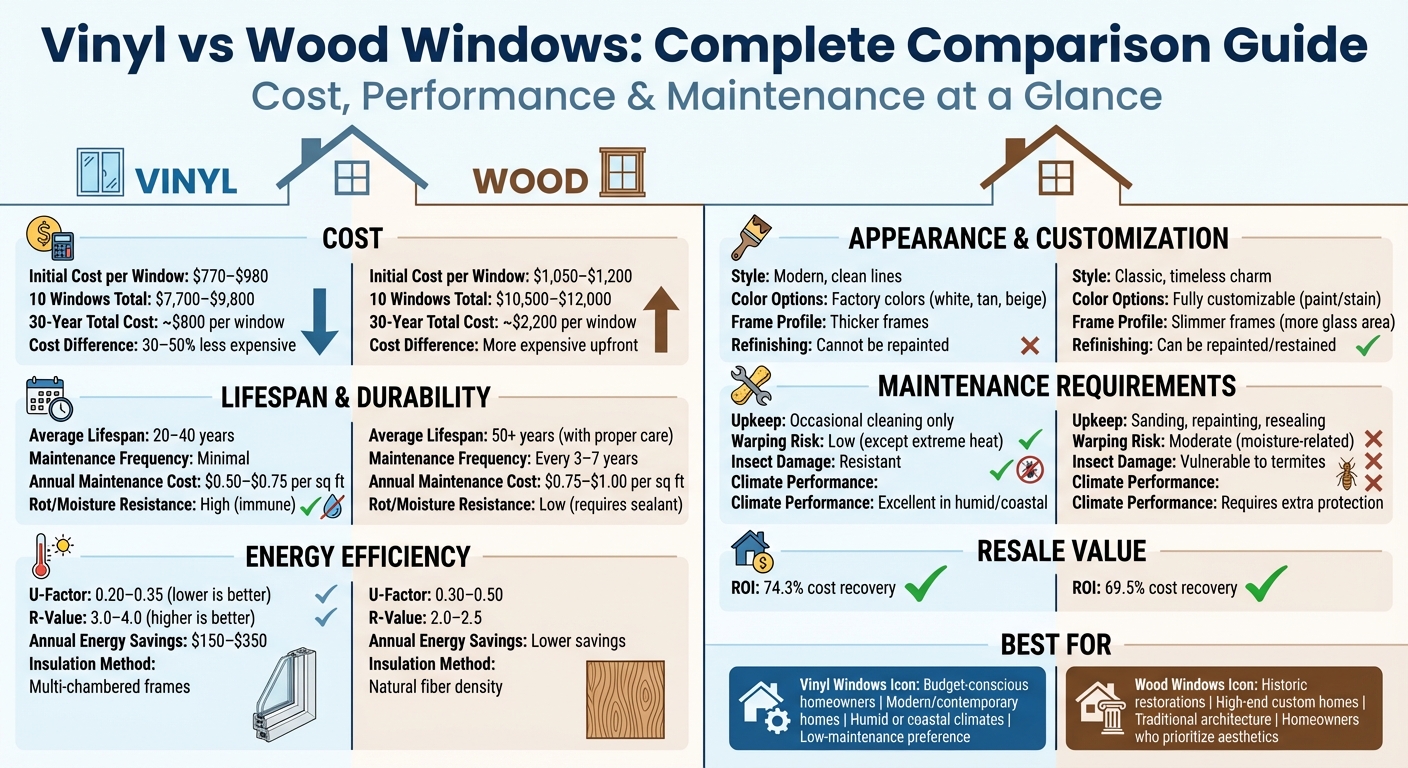
Vinyl vs Wood Windows: Complete Cost, Performance & Maintenance Comparison
Appearance and Design Options
The look of your windows plays a big role in defining your home’s overall style. Wood windows bring a classic charm, showcasing natural wood grain and offering endless customization options. You can paint or stain them any color, giving you the flexibility to match both the interior and exterior of your home. This makes wood windows especially popular for historic restorations and traditional architectural styles like Colonial, Victorian, or Craftsman homes.
On the other hand, vinyl windows provide a sleek, modern appearance with clean lines, making them a great fit for contemporary or minimalist designs. They come in pre-set factory colors – usually white, tan, or beige – and cannot be repainted or restained after installation. However, the color runs throughout the material, which helps hide small scratches. Some high-end vinyl options now feature wood-grain textures and darker finishes, aligning well with modern farmhouse styles.
Vinyl Windows: Clean Lines and Easy Upkeep
Vinyl window frames are designed with thicker profiles to ensure durability, which slightly reduces the glass area compared to wood. While this might limit the view, the trade-off is their low-maintenance appeal. Vinyl windows never need repainting or refinishing, making them a practical choice for urban and suburban homes or cost-conscious renovations.
Wood Windows: Timeless Style with Customization
Wood frames offer slimmer profiles, which means larger glass areas for better views and more natural light. Their ability to be repainted or stained over time gives homeowners the freedom to refresh their look as styles change. For those who want the best of both worlds, wood-clad windows combine the beauty of real wood interiors with a durable, low-maintenance vinyl or aluminum exterior, making them both stylish and practical.
While aesthetics are key, these design choices also impact energy efficiency and upkeep, so it’s important to weigh your options carefully.
Energy Performance and Insulation
The insulation capability of your windows plays a major role in keeping your home comfortable and managing energy costs. Both vinyl and wood windows provide excellent thermal performance, but they achieve this in distinct ways. Their long-term efficiency also depends heavily on durability. Let’s dive into how vinyl windows can optimize energy efficiency with minimal upkeep.
Modern vinyl frames are built with multi-chambered frames containing 3 to 5 internal air pockets. These pockets trap heat and reduce thermal transfer. High-end models often include foam-filled cores for additional insulation, which typically results in U-factor ratings between 0.20 and 0.35 and R-values up to 4. The fusion-welded corners on vinyl frames create durable, airtight seals, reducing heat loss by 15% to 20% in colder climates compared to wood windows. This level of efficiency can translate into annual energy savings of $150–$350.
On the other hand, wood windows rely on their natural cellular structure and density for insulation. Their U-factors generally range from 0.30 to 0.50, with R-values between 2.0 and 2.5. However, maintaining their performance requires consistent upkeep. Without regular painting and sealing every 3 to 7 years, wood frames can absorb moisture, leading to cracking, swelling, or warping, which compromises efficiency. Routine inspections of weatherstripping and caulking are essential to preserve their insulating properties over time.
Vinyl Windows: Energy Efficiency Without the Hassle
One of vinyl’s standout features is its low-maintenance reliability. Unlike wood, vinyl doesn’t absorb moisture, so it won’t swell, warp, or rot – even in humid or rainy conditions. This moisture resistance helps maintain tight seals and consistent energy performance for 20 to 40 years with little intervention. Additionally, vinyl’s non-conductive nature and multi-chambered design make it highly resistant to heat transfer. Opting for foam-filled frames can further enhance its insulation capabilities.
Wood Windows: Solid Insulation, But With Effort
Wood’s natural density makes it an effective thermal barrier. However, moisture remains its biggest weakness. Even minor lapses in maintenance – like cracked paint or dried-out seals – can reduce efficiency over time by allowing air leaks. For those who love the timeless look of wood but want added weather protection, wood-clad windows (featuring a wood interior and a vinyl or aluminum exterior) provide a practical alternative.
| Metric | Vinyl Windows | Wood Windows |
|---|---|---|
| Typical U-Factor | 0.20 – 0.35 (lower is better) | 0.30 – 0.50 |
| Typical R-Value | 3.0 – 4.0 (higher is better) | 2.0 – 2.5 |
| Insulation Method | Multi-chambered, foam-filled frames | Natural fiber density |
| Air Leakage Risk | Low; fusion-welded corners | Higher if not maintained (warping/rot) |
| Maintenance Impact | Consistent performance over decades | Declines without regular upkeep |
Both vinyl and wood windows can deliver excellent energy performance when paired with quality glazing options like Low-E coatings or argon gas fills. Ultimately, your choice should balance energy efficiency, maintenance needs, and your preferred design aesthetic.
Durability and Expected Lifespan
Vinyl windows generally last between 20 and 40 years with minimal maintenance, while wood windows can surpass 50 years if properly cared for. This difference reflects the trade-off between the ease of low-maintenance materials and the longevity achievable with consistent upkeep.
Vinyl Windows: Built for Tough Conditions
Vinyl windows are naturally resistant to moisture, rot, rust, and insect damage, making them a great choice for areas with high humidity or coastal climates.
However, not all vinyl is created equal. Lower-quality vinyl frames can warp, sag, or discolor when exposed to temperatures above 163°F, due to their thermal expansion rate of 4.0. To avoid these issues, it’s important to select UV-protected, high-quality vinyl, especially in regions with intense heat.
Wood Windows: Longevity Through Maintenance
Wood windows can outlast vinyl, but that longevity comes with a commitment. Without regular care – such as sanding, repainting, and resealing every 3–7 years – wood frames are prone to rotting, warping, or pest damage. The durability of wood windows depends heavily on consistent maintenance, balancing their timeless aesthetic with the effort required to keep them in good condition.
Both vinyl and wood windows perform best when properly maintained, and their long-term durability can also impact their insulation efficiency over time.
| Feature | Vinyl Windows | Wood Windows |
|---|---|---|
| Average Lifespan | 20–40 years | 30–50+ years (with proper care) |
| Rot/Corrosion Resistance | High; virtually immune | Low; requires protective sealant |
| Insect Damage | Resistant | Vulnerable to termites and pests |
| Warping Risk | Low (except in extreme heat) | Moderate (due to moisture) |
| Maintenance Needs | Minimal; occasional cleaning | High; every 3–7 years |
For those who admire the classic charm of wood but want added durability, wood-clad windows are a smart compromise. These combine a wood interior with a protective vinyl or aluminum exterior, offering the best of both worlds.
Maintenance Requirements
When it comes to maintenance, the material of your windows plays a significant role in determining the time and money you’ll need to invest. Vinyl windows are known for their hassle-free upkeep, while wood windows require more consistent attention.
Vinyl Windows: Minimal Effort, Maximum Convenience
Vinyl windows are a breeze to maintain. A simple wipe-down every few months is usually all it takes to keep them clean, and there’s no need for painting, staining, or sealing. This low-maintenance feature can lead to substantial savings over time. On average, maintaining vinyl windows costs around $0.50–$0.75 per square foot annually, which could save homeowners between $500 and $1,000 over a decade compared to wood windows. To keep them operating smoothly, occasional checks on hardware like locks and balances are recommended.
Wood Windows: Hands-On Maintenance Required
Wood windows, on the other hand, demand regular care to keep them in good condition. They need to be repainted or restained every 3–7 years to prevent wear and tear. T
his process involves sanding, cleaning, and reapplying paint or stain to maintain their finish. Without this upkeep, wood frames are prone to moisture damage and decay. For those in humid or coastal areas, extra precautions – like using marine-grade sealants on sills and ensuring proper ventilation during wet seasons – are necessary to combat moisture issues. Annual inspections for signs of peeling paint or cracked seals are also essential.
Maintaining wood windows typically costs about $0.75–$1.00 per square foot annually, amounting to approximately $2,200 over 30 years, compared to around $800 for vinyl.
These differences in maintenance don’t just affect your daily routine – they can also have a lasting impact on energy efficiency and overall cost-effectiveness.
Cost Comparison and Long-Term Value
When weighing the choice between vinyl and wood windows, it’s essential to consider both the upfront costs and the long-term financial impact. Vinyl windows are generally 30% to 50% cheaper than wood windows initially, making them a practical option for budget-conscious homeowners. For example, a standard 48-inch vinyl sash window costs approximately $770 to $980 installed, while a comparable wood window ranges from $1,050 to $1,200. If you’re replacing 10 windows, expect to spend about $7,700–$9,800 for vinyl versus $10,500–$12,000 for wood.
The cost disparity becomes even more pronounced over time. Over a 30-year period, the total expense for maintaining a single vinyl window is about $800, compared to $2,200 for a wood window. Vinyl windows are also easier and cheaper to install, with labor costs averaging $250 per window, thanks to their straightforward “pop-in” design.
When it comes to resale, vinyl windows often provide a better return on investment (ROI). They typically recoup about 74.3% of their cost, compared to 69.5% for wood windows. While vinyl windows may have a shorter lifespan, their minimal maintenance needs make them a financially attractive option in the long run.
Cost Breakdown Table
| Feature | Vinyl Windows | Wood Windows |
|---|---|---|
| Initial Installed Cost | $770–$980 per window | $1,050–$1,200 per window |
| Lifespan | 20–40 years | 50+ years (with upkeep) |
| Maintenance Frequency | Minimal | Regular (every 3–7 years) |
| U-Factor (Efficiency) | Excellent | Very Good |
| 30-Year Total Cost | ~$800 per window | ~$2,200 per window |
| Resale ROI | 74.3% | 69.5% |
These numbers highlight vinyl windows’ financial advantages, especially for those prioritizing cost-efficiency. However, wood windows may still be worth the investment for historic restorations or high-end homes, where their aesthetic and premium feel align with the property’s character. Up next, we’ll dive into how these two window types perform across different climate conditions.
Performance in Different Climates
Climate plays a huge role in how long windows last and how well they perform. In areas like Virginia and North Carolina, summers bring intense heat and humidity, while coastal regions face challenges like salt spray and tropical storms. This makes choosing the right window material essential.
Vinyl windows are a standout choice for the Southeast’s humid environment. Thanks to their non-porous PVC construction, they don’t absorb moisture. This means no rotting, swelling, or mold development – even in high-humidity coastal areas such as Virginia Beach or Wilmington.
“In a city where humidity is the norm, wooden window frames can absorb moisture, leading to warping, rotting, or mold growth. Vinyl, on the other hand, remains non-porous.”
– Paramount Builders
High-quality vinyl windows are designed to handle the region’s harsh conditions. They include UV stabilizers like titanium dioxide, which help prevent fading and chalking under intense sunlight. Plus, they resist warping even when surface temperatures reach up to 165°F.
On the other hand, wood windows, while visually appealing, struggle in these climates. Untreated wood is vulnerable to fungal growth, decay, and salt spray in coastal areas. In fact, untreated wood in such conditions can start rotting within just 2 to 3 years. For example, Charlotte’s average July dew point exceeds 68°F, creating constant moisture challenges for wooden frames. For those who prefer the look of wood but need durability, wood-clad windows with aluminum or vinyl exteriors offer better protection – though at a higher price.
Coastal areas demand even more durability. North Carolina’s coast experiences 15 to 20 days per year of tropical storm-force winds. In these regions, windows east of the Intracoastal Waterway must meet ASTM E1996 Large Missile impact standards and have a Design Pressure rating of at least 50. Vinyl windows naturally resist salt air corrosion, while wood requires protective cladding to endure.
The climate-driven differences in window performance also influence energy efficiency and lifespan. For homes in the hot Southern climate, look for windows with a low Solar Heat Gain Coefficient (SHGC) of 0.25 or lower to reduce cooling costs. Energy-efficient windows can save North Carolina homeowners up to $500 annually on HVAC expenses. Additionally, Duke Energy offers a $40 per window rebate for units with a U-value of 0.30 or less and an SHGC of 0.25 or less.
Vinyl Windows Co High-Performance Features
Vinyl Windows Co takes energy efficiency, durability, and ease of maintenance to the next level with carefully designed high-performance features.
Energy efficiency is built into every window. The multi-chambered frames trap insulating air, creating effective thermal breaks. Paired with double or triple-pane glass filled with Argon gas and coated with Low-E technology, these windows reflect infrared light – keeping your home cool in the summer and warm in the winter. Some premium models achieve U-factors as low as 0.20, which could lead to annual energy savings of $101–$583, depending on your location. Fusion-welded corners ensure an airtight seal to block drafts, while warm-edge spacers reduce condensation along the glass edges. These features work together to deliver impressive energy performance.
Weather sealing is designed for tough conditions. Unlike wood windows that rely on mechanical fasteners, Vinyl Windows Co uses fusion-welded corners to reinforce the frame and prevent moisture from seeping into vulnerable areas. Factory-installed weather-stripping provides an extra barrier against wind and moisture. Plus, the non-porous PVC material resists salt air, mold, and rot – making these windows particularly effective in coastal environments.
Customization options let you match your home’s style. Vinyl Windows Co offers a variety of window styles, including casement, double-hung, sliding, bay, bow, and awning designs. Exterior color choices range from black and architectural bronze to forest green, all featuring heat-reflective capstock technology to prevent warping under intense sunlight. For interiors, woodgrain laminates like Medium Oak and Colonial Cherry give the look of natural wood without the upkeep. Grid patterns – such as Colonial, Prairie, Diamond, and Craftsman – are available in both flat and contour profiles.
Vinyl Windows Co products are sold through authorized dealers who provide expert installation and support. Each window is custom-sized to the sixteenth of an inch to ensure a snug fit that maintains energy efficiency and prevents air leaks. Backed by a lifetime warranty, these windows are installed by trained professionals who account for vinyl’s thermal expansion in extreme temperatures, ensuring long-term performance and minimal maintenance.
Conclusion: Choosing the Right Windows for Your Home
When it comes down to selecting windows, the best choice depends on your home’s unique requirements and your priorities.
Wood windows offer timeless charm and customization. Making them an excellent choice for historic or high-end homes. However, they demand regular maintenance – every three to seven years – to avoid issues like rot or warping. On the other hand, vinyl windows stand out for their energy efficiency, resistance to moisture, and minimal upkeep.
Vinyl options, however, cost 30–50% less while requiring far less maintenance. Modern vinyl designs even offer wood-grain finishes and factory-applied colors that replicate natural materials without the hassle of ongoing maintenance. With a lifespan of 20 to 40 years, vinyl windows can recoup approximately 68% of their cost at resale, compared to around 66% for wood.
Climate should also influence your decision. Homes in humid areas generally benefit more from vinyl. Meanwhile, wood’s natural insulating properties shine in colder, drier climates – though they require consistent sealing and upkeep to perform well. For contemporary homes, vinyl often delivers the best balance of energy efficiency, durability, and ease of care.
Companies like Vinyl Design add even more value with advanced features like multi-chambered frames, fusion-welded corners, and U-factors as low as 0.20. These innovations could save you anywhere from $101 to $583 annually on energy bills. Plus, their windows are custom-fitted for precision and come with a lifetime warranty, installed by trained professionals.
Ultimately, the choice between wood and vinyl depends on what matters most to you. Wood offers unmatched elegance and customization, while vinyl excels in energy savings, longevity, and low maintenance – especially in climates that test a window’s durability.
FAQs
How do I choose vinyl vs wood for my climate?
Choosing between vinyl and wood windows often comes down to the climate where you live and how much upkeep you’re willing to handle.
Vinyl windows are a solid choice for areas with high humidity or extreme temperature changes. They’re resistant to moisture, warping, and rot, which makes them durable and low-maintenance. On the other hand, wood windows are known for their timeless aesthetic and excellent insulation. However, they thrive best in dry, moderate climates and require consistent upkeep – think painting or sealing – to maintain their look and functionality.
When deciding, weigh your local weather conditions – like humidity levels and temperature swings – against how much maintenance you’re ready to take on.
What features matter most for energy savings?
When it comes to energy savings, a few key elements make a big difference: thermal insulation and overall energy efficiency.
Vinyl windows often stand out in this area, thanks to their low U-values and multi-chambered frames, which significantly enhance insulation. Wood windows, being natural insulators, also perform effectively, though they may need additional improvements like proper sealing and high-quality glazing to reach their full potential.
To get the best energy efficiency, pay close attention to the frame design, glazing options, and installation quality. These factors are crucial for maximizing insulation and reducing energy loss, no matter which material you choose.


