

Dynamic glazing is transforming how buildings manage energy and comfort. Unlike static windows, this technology adjusts its tint based on outdoor conditions, reducing energy use by up to 15% and cutting peak cooling demand by over 25%. It blocks up to 93% of solar heat while maintaining clear views, offering better indoor comfort and lower HVAC costs. Key technologies include Electrochromic (EC) glass, Suspended Particle Devices (SPD), and Polymer-Dispersed Liquid Crystal (PDLC), each suited to different applications like energy control, privacy, or glare reduction.
Adopting dynamic glazing can save billions of MWh and reduce CO₂ emissions significantly. It also supports green certifications like LEED by improving energy performance and daylighting. When integrated with building automation systems, it further optimizes energy use. This solution allows architects to design larger, energy-efficient glass facades without compromising comfort or performance.
Key Benefits:
- Energy Savings: Cuts HVAC energy use by 5–15%.
- Comfort: Reduces glare, blocks UV rays, and stabilizes indoor temperatures.
- Design Flexibility: Enables larger glass surfaces without energy penalties.
- Environmental Impact: Reduces embodied carbon and operational emissions.
Dynamic glazing is a practical solution for reducing energy use, improving occupant comfort, and meeting modern building standards.
How Dynamic Glazing Works
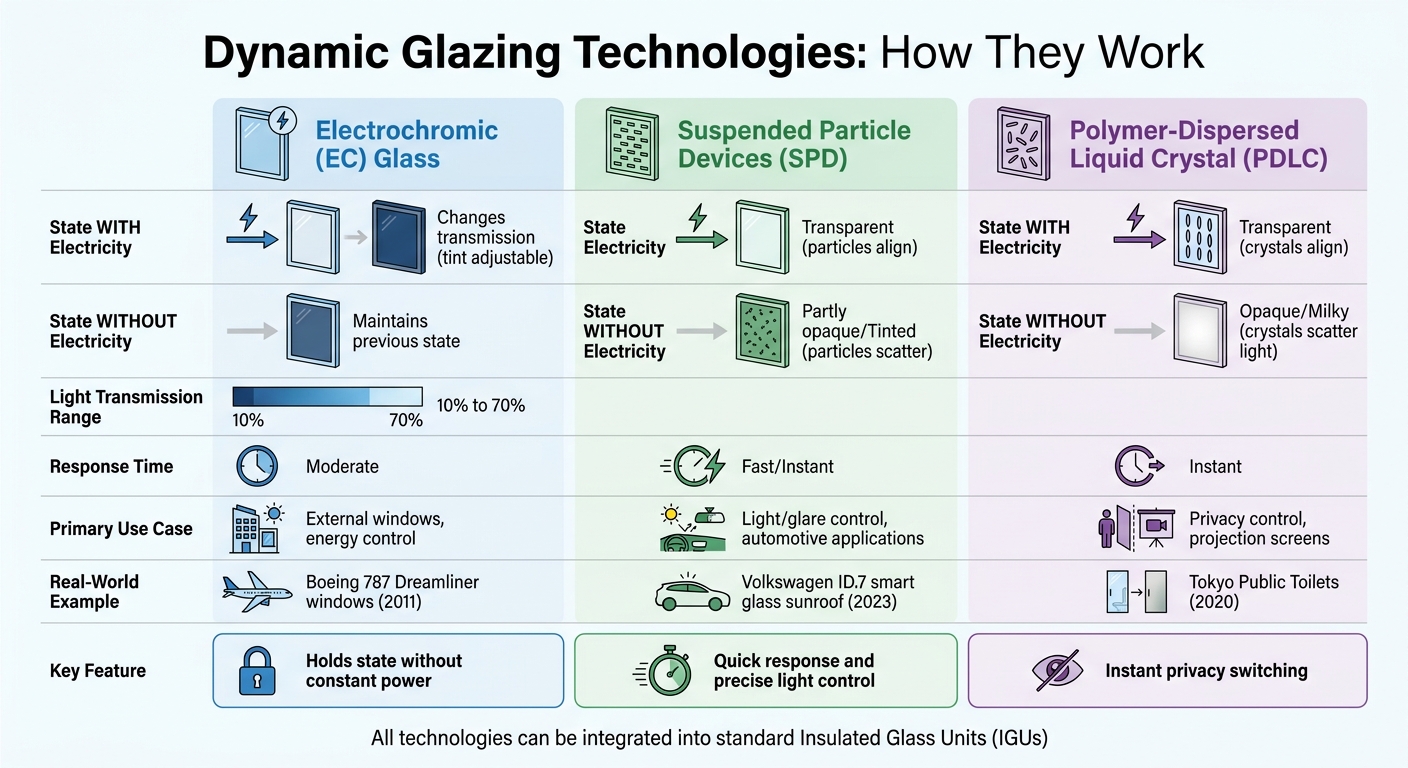
Dynamic Glazing Technologies Comparison: EC, SPD, and PDLC Glass
Understanding how dynamic glazing functions sheds light on how this technology addresses the shortcomings of traditional windows, such as those using standard Low-E insulation technology.
What is Dynamic Glazing?
Dynamic glazing, often referred to as smart glass or switchable glass, is a type of technology that can alter its optical properties – like transparency, light transmission, and heat gain – based on external factors such as voltage, temperature, or light. Unlike conventional windows, dynamic glazing adapts to control solar heat and visible light while maintaining clear views.
This technology eliminates the need to compromise between large windows and energy efficiency. It adjusts to outside conditions and user preferences, managing sunlight and heat without relying on blinds or shades.
Dynamic glazing systems fall into two main categories:
- Active systems, which require an electrical input (like voltage).
- Passive systems, which naturally respond to changes in heat or light.
These features contribute to better energy use and enhanced indoor comfort through advanced energy-efficient glass packages.
Let’s dive into the key technologies that make dynamic glazing possible.
Main Technologies Used in Dynamic Glazing
Three core technologies dominate the dynamic glazing landscape. Each offers unique benefits and applications.
Electrochromic (EC) glass relies on a voltage-triggered chemical reaction to change its tint. Once adjusted, it holds its state without needing constant power. EC glass typically varies light transmission between 10% and 70%.
A practical example is the Boeing 787 Dreamliner, which introduced electrochromic windows in August 2011. These windows allow passengers to adjust tint levels while still enjoying the view outside. Thanks to its reliable switching capabilities, EC glass is widely used in architectural settings.
Suspended Particle Devices (SPDs) feature a thin film of nanosized particles suspended in a liquid between glass layers. When no voltage is applied, the particles scatter light, blocking it. Applying voltage aligns the particles, allowing light to pass through.
SPD technology is known for its quick response and precise control over light. This makes it a favorite for automotive applications. For instance, the Volkswagen ID.7, launched in 2023, includes a smart glass sunroof that shifts from transparent to opaque, enhancing cabin comfort.
Polymer-Dispersed Liquid Crystal (PDLC) glass incorporates liquid crystals dispersed in a polymer matrix. In their natural state, the crystals scatter light, making the glass appear opaque and milky. When an electric field is applied, the crystals align, turning the glass transparent.
PDLC is mainly used for privacy rather than energy efficiency. A notable example is the Tokyo Public Toilets project, unveiled in August 2020. These restrooms use PDLC glass to remain transparent when unoccupied, signaling openness. They switch to opaque when in use for privacy.
| Technology | State with Electricity | State without Electricity | Primary Use Case |
|---|---|---|---|
| Electrochromic (EC) | Changes transmission (tint) | Maintains previous state | External windows, energy control |
| PDLC (Liquid Crystal) | Transparent | Opaque (Milky) | Privacy, projection screens |
| SPD | Transparent | Partly opaque/Tinted | Light/glare control, automotive |
These technologies lay the foundation for improving energy efficiency and enhancing occupant experiences, which we’ll explore further in the next section.
sbb-itb-a4eb837
Energy Efficiency Benefits
Dynamic glazing transforms how buildings manage energy by actively adapting to environmental changes, instead of passively allowing heat and light to pass through. This smart response leads to noticeable reductions in heating, cooling, and lighting demands.
Lower Energy Consumption and Costs
Dynamic glazing works by controlling two key wavelengths of light:
- Visible light (380–780 nm)
- Near-infrared (NIR) radiation (780–2,520 nm)
NIR contributes to heat gain without adding visibility. Blocking it helps lower cooling demands while still allowing natural light to illuminate indoor spaces. This technology can block as much as 93% of solar heat, significantly cutting down heat gain.
The impact on HVAC systems is striking:
- Dynamic glazing can reduce a building’s total energy use by 5–15%.
- It can cut peak summer cooling demand by over 25%.
- Window surface temperatures drop by up to 15°F when using dynamic glass.
Yuan Gao, a Materials Research Scientist at Lawrence Berkeley National Laboratory, explains:
“By blocking sunlight at the right time, TR dynamic windows can help reduce energy consumption and decarbonize buildings – but they are not a one-size-fits-all solution. These windows will deliver the biggest benefits to buildings where both heating and cooling are important.”
Dynamic glazing also adapts to seasonal needs. In winter, the windows stay clear to capture passive solar heat, lowering heating expenses. During summer, they tint automatically to block heat. This keeps indoor temperatures steady without overburdening air conditioning systems. Some advanced electrochromic devices even operate without external energy, thanks to self-coloring and self-bleaching capabilities.
Nationwide simulations highlight smart windows’ potential for energy savings and cost reductions. This makes them a valuable part of sustainable building design. For individual buildings, lighting and cooling energy reductions can surpass 10%. Dynamic glazing also outperforms standard low-emissivity glass by about 10% in energy efficiency. This precise energy management underscores the advantages dynamic systems offer over static alternatives.
Static vs. Dynamic Glazing Performance
When comparing static and dynamic glazing, the difference in performance is clear:
| Metric | Static Glazing (Low-E) | Dynamic Glazing |
|---|---|---|
| Overall Energy Savings | Baseline | 5–15% reduction |
| Peak Cooling Demand | High | 25%+ reduction |
| Solar Heat Blockage | Fixed / Limited | Up to 93% |
| Lighting & Cooling Energy | Baseline | 10%+ reduction |
| Surface Temperature | Baseline | Up to 15°F reduction |
| View Preservation | High (unless shades used) | High (even when tinted) |
| Adaptability | None (Static) | Adjusts to hourly/seasonal changes |
Traditional solutions like shades or louvers often allow heat to pass through before activating. Dynamic glazing blocks solar heat directly at the window surface. It also maintains outdoor views and natural light. This avoids the trade-offs in comfort and efficiency often seen with static glazing.
Manufacturers like Vinyl Windows Co are incorporating dynamic glazing into sustainable building designs. They deliver measurable energy savings and improved comfort for occupants. These benefits highlight the growing role of dynamic systems in modern energy-efficient architecture.
Occupant Comfort and Design Flexibility
Dynamic glazing doesn’t just save energy – it enhances indoor comfort and opens up exciting design possibilities, aligning perfectly with the goals of sustainable building.
Better Indoor Comfort
One of the standout benefits of dynamic glass is its ability to eliminate glare. It automatically adjusts to darken, reducing glare on computer screens and work surfaces. It does this without the need for blinds or curtains.
And here’s the best part: it still preserves outdoor views. Some systems, when fully tinted, can block up to 99.5% of light. Yet they remain transparent enough to maintain that vital connection to the outside world.
Thermal comfort is another major advantage. Advanced dual-band systems manage visible light and near-infrared (NIR) radiation independently, offering four operating modes:
- During summer, the glass blocks heat-producing NIR while letting in natural daylight.
- In winter, it stays clear to harness passive solar warmth.
Impressively, modern electrochromic systems can shift modes in under 2 seconds.
This precise control eliminates the temperature swings often experienced with traditional windows. Dynamic glazing allows building facades to adapt to changing exterior conditions and occupant preferences, all while maintaining transparency. It avoids the usual compromises between daylight, views, and energy efficiency. Plus, it blocks harmful UV rays (320–380 nm), protecting furniture from fading and contributing to occupant health.
These improvements in comfort also pave the way for innovative architectural designs.
More Design Options for Architects
Dynamic glazing transforms the way architects approach building design. It resolves the age-old conflict between aesthetics and energy efficiency. Traditional windows are often seen as the weak spot in energy performance. This leads to restrictions on window sizes in energy codes.
Dynamic glass flips this narrative. It enables larger glass facades and curtain walls without sacrificing energy performance or occupant comfort.
This flexibility is particularly valuable in areas with strict energy regulations, like California’s Title 24 standards. As Sok and Sanders explain:
“It thus offers a solution which avoids having to trade off daylight and views with energy performance, allowing more glass to be used without energy penalty AND without causing thermal or visual discomfort for occupants”.
Dynamic glass integrates seamlessly into high-efficiency Insulated Glass Units (IGUs). It can be customized with nearly any glass type, offering architects a wide range of options.
The design benefits go beyond window size. With dynamic glazing, mechanical shading devices become obsolete – no more blinds, curtains, or external shutters disrupting the clean lines of a building. Laminated dynamic glass panes also enhance acoustic performance, often exceeding noise-reduction standards.
These features not only improve occupant experience but also support certifications like LEED, BREEAM, and WELL. This aligns projects with both environmental goals and wellness priorities.
Environmental Impact and Sustainability
Dynamic glazing offers measurable benefits for the environment. This makes it a key player in reducing the carbon emissions linked to buildings.
Long-Term Environmental Benefits
Dynamic glazing delivers real, measurable results:
- It can lower HVAC energy use by 5–15% through real-time heat management.
- It can reduce peak summer energy demand by over 25%.
- In buildings with large window-to-wall ratios (around 0.60), it cuts primary energy use by 10–20% compared to standard low-e windows.
- When paired with daylighting controls, peak energy demand can drop by 20–30%.
- If electrochromic windows reach a 40% market share in U.S. commercial buildings by 2030, they could save between 91.5 and 97.3 trillion Btu.
Manufacturers have also made strides in reducing embodied carbon. Between 2020 and 2024, one manufacturer cut the embodied carbon of its dynamic glass units by 64%. Some products now carry 48% less embodied carbon than competitors.
Additionally, dynamic glass eliminates the need for blinds, shades, or shutters. This reduces both carbon footprints and maintenance needs. Many manufacturers recycle 100% of the scrap glass produced during manufacturing.
These advantages align with green building performance standards, as discussed in the next section on certifications.
Green Building Certifications
Dynamic glazing not only saves energy but also helps projects earn points in green certification systems like LEED. It particularly contributes to the Energy & Atmosphere (EA) and Indoor Environmental Quality (EQ) categories.
By reducing solar heat gain coefficients and improving light-to-solar gain ratios, it supports the “Optimize Energy Performance” credit. This lowers HVAC and artificial lighting demands. HVAC, ventilation, and lighting account for about 61% of a building’s energy use. That makes these savings impactful.
For Indoor Environmental Quality credits, dynamic glazing maintains clear views while tinting. It earns points for “Daylight” and “Quality Views” without requiring traditional blinds or shades. As E. Sok and H. Sanders from Vetrotech Saint-Gobain and SAGE Electrochromics note:
“Today’s green building certifications such as LEED, BREEAM, and HQE all recognize that a sustainable design is not just about energy efficiency and all integrate sections related to indoor environment quality, such as provision of natural daylight and views through windows”.
Additionally, dynamic glazing supports Materials & Resources (MR) credits with its recyclable components and reduced construction waste.
Lifecycle Cost and Impact Comparison
| Feature | Standard Low-E Glass | Dynamic Glazing |
|---|---|---|
| HVAC Energy Impact | Baseline consumption | 5–15% reduction |
| Peak Summer Demand | High during solar peaks | 25%+ reduction |
| Primary Energy Use (Perimeter Zones) | Standard performance | 10–20% reduction |
| Peak Demand Savings | Baseline | 20–30% reduction |
| Embodied Carbon | Higher with added shading systems | 48% lower than competing systems |
| Shading Requirements | Blinds/shades needed | Integrated; no mechanical systems |
| Energy Recovery | None | Up to 44.4% return efficiency |
Some advanced electrochromic systems even offer energy storage capabilities. They achieve up to 44.4% energy return efficiency. Certain models require no external power for tinting and bleaching, further enhancing their eco-friendly appeal.
At Vinyl Windows Co, we are committed to energy-efficient window solutions that align with the sustainability goals of dynamic glazing. This dedication reflects our focus on creating environmentally responsible designs.
Integration with Building Systems
Dynamic glazing becomes even more effective when it’s part of a larger building control ecosystem. By linking it to Building Automation Systems (BAS) or Energy Management Systems (EMS), these windows can coordinate with HVAC and lighting systems. Together, they respond dynamically to changing conditions throughout the day.
Instead of functioning independently, the glazing works as a key player in managing energy use across the entire building.
Automated Controls and Smart Systems
Modern dynamic glazing systems rely on real-time sensor data to adjust tint levels. These sensors monitor several factors:
- Outdoor air temperature (OAT)
- Indoor air temperature (IAT)
- Incident total solar radiation (ITSR)
- Incident beam solar radiation (IBSR)
Using this information, the glazing can block up to 93% of solar heat when needed. Studies show that temperature-based controls are particularly effective in reducing energy costs in office environments.
With optimized control strategies, buildings can achieve annual energy cost savings of 11% to 18%. The system automatically adjusts tint levels based on pre-set thresholds. This reduces the strain on air conditioning units during peak summer hours. Cooling systems operate less often and at lower intensities, improving overall energy efficiency.
For added flexibility, these systems include manual overrides through mobile apps, wall-mounted controls, or even voice commands. Occupants can adjust tint levels as needed.
Advanced setups use Model Predictive Control (MPC), which goes a step further by forecasting solar positions and weather patterns. This predictive approach ensures the glass adapts proactively – adjusting before conditions shift – to maintain thermal comfort and visual clarity. By balancing insulation needs with daylight management, the glazing keeps indoor temperatures consistent while preserving clear views of the outdoors.
When connected to BAS and EMS, dynamic glazing not only improves energy efficiency. It also strengthens its role in designing buildings that are both functional and environmentally conscious.
Conclusion
Dynamic glazing is changing the way buildings handle energy use, comfort, and their overall environmental footprint. By adapting to shifting weather conditions, this technology achieves HVAC energy savings of 5–15%. It also cuts peak summer demand by over 25%.
It eliminates the long-standing compromise between expansive glass facades and energy efficiency. Architects can now design highly glazed structures without sacrificing performance or occupant comfort.
The environmental advantages are equally impressive. If electrochromic windows were widely adopted in U.S. commercial buildings, they could save an astounding 66.87 billion MWh of energy. They could also reduce CO₂ emissions by 66.94 billion tons. Recent technological advancements have also slashed embodied carbon by up to 64%.
This combination of operational savings and lower manufacturing impacts positions dynamic glazing as a key player in achieving green building certifications like LEED and BREEAM.
“Dynamic glass empowered the architect to achieve sustainable design goals, without restricting their design freedom and aesthetics choices.” – E. Sok and H. Sanders, Vetrotech Saint-Gobain / SAGE Electrochromics
Beyond energy and environmental benefits, dynamic glazing enhances daily life for building occupants. Static windows rely on blinds or shades to manage glare and heat. Dynamic glass adjusts its tint automatically instead. This ensures uninterrupted views, consistent natural daylight, and a more comfortable indoor environment – all while maintaining a connection to the outdoors.
As the demand for energy-efficient buildings continues to grow amid climate challenges, dynamic glazing offers a practical solution for both new projects and retrofits. Companies like Vinyl Windows Co are actively pursuing advanced window technologies to improve energy performance and comfort across the United States. These developments highlight the pivotal role dynamic glazing will play in shaping the future of sustainable building design.
FAQs
Which dynamic glazing type should I choose: EC, SPD, or PDLC?
When choosing between glazing technologies, it all comes down to what you need:
- Electrochromic (EC) glazing is great for adjusting transparency, making it a solid pick for energy efficiency and comfort.
- Suspended Particle Device (SPD) glazing stands out for its quick and precise control over light and heat.
- Polymer Dispersed Liquid Crystal (PDLC) glazing is perfect for instant privacy, though it doesn’t offer as much control over light transmission.
How hard is it to integrate dynamic glazing with a building automation system?
Integrating dynamic glazing with a building automation system might sound challenging, but it’s definitely doable with the right approach. Active systems, such as electrochromic glass, can link to building management systems. You can control them either manually or automatically. These systems can adjust based on various factors like temperature, sunlight levels, or even occupant preferences.
The key to success lies in carefully planning the control algorithms. You also need to ensure the system is fully compatible with the automation setup. With proper coordination, the integration process can run smoothly and deliver effective results.
Is dynamic glazing cost-effective for retrofits or only new construction?
Dynamic glazing can be an economical choice for retrofitting. This is especially true when it helps cut down energy consumption and aligns with building performance requirements. Although the upfront investment might seem steep, options like electrochromic glass can lead to substantial energy savings over the long term. This boosts energy efficiency and reduces operational costs.


