

Choosing between double pane and triple pane windows? Here’s what you need to know:
- Double Pane Windows: Affordable, efficient for moderate climates, and lighter, making them easier to install. They reduce outdoor noise by up to 50% and block 90% of UV rays. Costs range from $350–$1,500 per window, with potential energy savings of $126–$465 annually.
- Triple Pane Windows: Better insulation (15–20% more effective), superior noise reduction, and reduced condensation. Ideal for cold climates (Zones 6–8) or noisy areas. However, they’re heavier, cost 15–40% more upfront, and have a longer payback period (10–20 years).
Quick Comparison:
| Feature | Double Pane Windows | Triple Pane Windows |
|---|---|---|
| Glass Layers | 2 | 3 |
| R-Value | 3.0–3.8 | 5.0–8.0 |
| Noise Reduction (STC) | 26–32 | 32–38 |
| Cost per Window | $350–$1,500 | $500–$3,000 |
| Annual Energy Savings | $126–$465 | $150–$550 |
| Payback Period | 8–12 years | 10–20 years |
If you’re in a colder region or need better noise control, triple pane windows are worth the investment. For moderate climates, double pane windows offer a more cost-effective solution. Always prioritize professional installation for optimal performance.
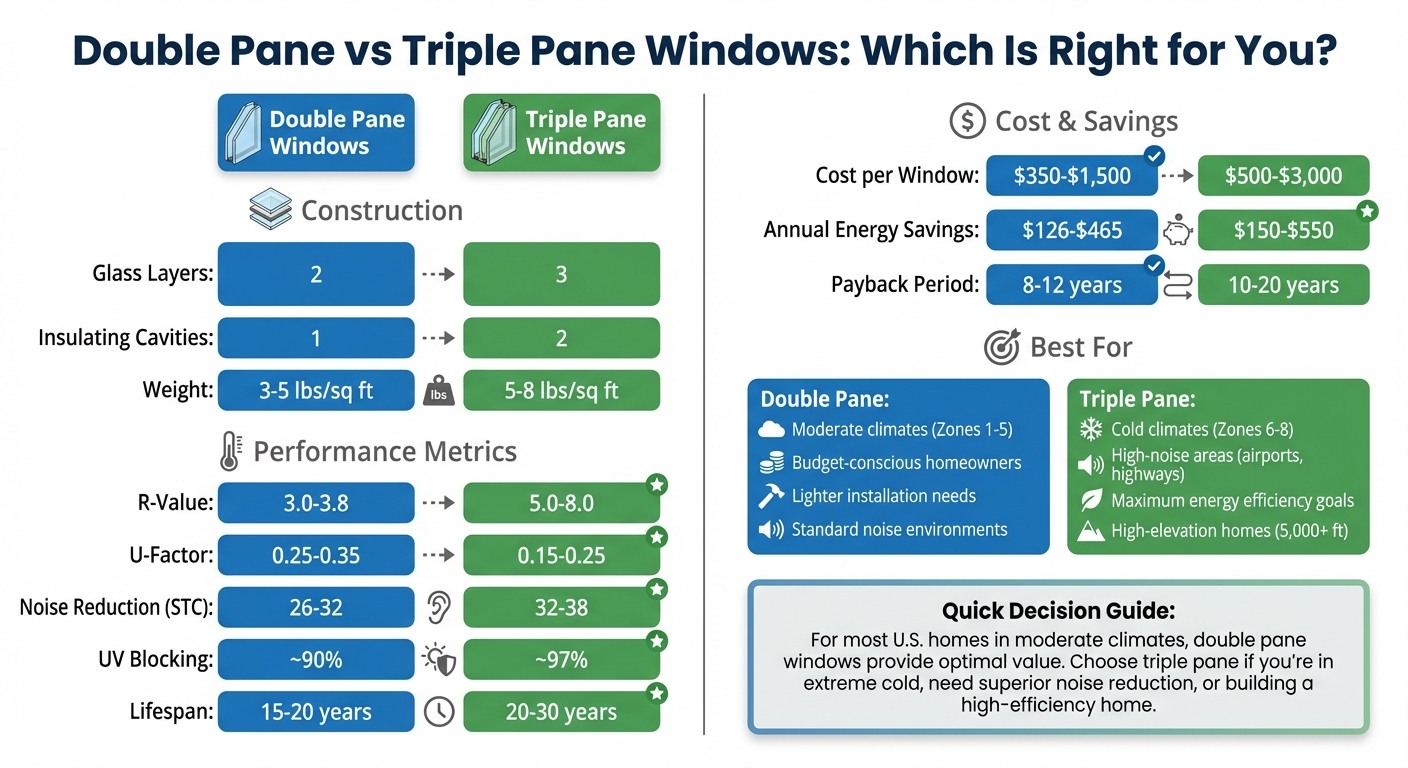
Double Pane vs Triple Pane Windows: Complete Comparison Chart
What Are Double Pane Windows?
Double pane windows, often called double-glazed windows, are Insulated Glass Units (IGUs) made with two layers of glass separated by a spacer and a sealed cavity. The space between the panes is filled with argon or krypton gas – both denser than air – to reduce heat transfer. This gas-filled gap acts as a thermal barrier, slowing down energy loss between your home and the outdoors.
Each component plays a role in creating this thermal barrier. The spacer, typically made from foam, plastic, or metal, keeps the panes apart, while an airtight sealant ensures the insulating gas stays in place. A desiccant inside the spacer absorbs any moisture that might sneak in. Many double pane windows also feature a Low-E coating, which reflects infrared light to help retain heat during winter and block solar heat in summer.
This design offers much better insulation compared to single-pane windows. While single-pane windows have an R-value (a measure of thermal resistance) of about 1, double pane windows typically range between 2 and 3.7. They also lower the U-factor (rate of heat loss) to values between 0.25 and 0.35. Beyond thermal performance, double pane windows can reduce outdoor noise by up to 50% and block around 90% of harmful UV rays. Understanding this design helps explain their functionality, benefits, and limitations.
Key Features of Double Pane Windows
Double pane windows create three layers of insulation: two glass panes and the gas-filled space between them. Argon is the most common gas used because it is cost-effective, though krypton is sometimes chosen for narrower gaps, despite being about 40% more expensive. The spacer and sealant ensure the cavity remains airtight.
Low-E coatings further enhance energy efficiency by reflecting heat while allowing natural light through. These coatings typically allow 60% to 80% of visible light to pass, ensuring energy savings without sacrificing brightness. High-quality double pane windows can last 20 to 40 years, depending on factors like maintenance and climate.
Benefits of Double Pane Windows
Double pane windows have become the standard in modern homes, offering excellent performance at competitive prices. Installation costs range from $350 to $1,500 per window, depending on size and materials.
Switching from single-pane to double pane windows can lead to significant energy savings. Homeowners may save anywhere from $126 to $465 annually on energy bills. For instance, in 2024, the Johnson family replaced their single-pane windows in a 50-year-old home and reported a $300 reduction in yearly heating and cooling costs, along with improved indoor comfort. Similarly, a tech company that upgraded its office building saw a 15% drop in energy costs and better noise control.
Another plus is their lighter weight. Double pane windows weigh about 3–5 lbs per square foot, compared to 5–8 lbs for triple pane windows. This makes them easier to install, especially in older homes, and their higher visible light transmission helps brighten interiors.
Drawbacks of Double Pane Windows
While double pane windows are effective, they have limitations in extreme climates. In colder regions (Climate Zones 6–8), they don’t insulate as well as triple pane windows, which can be 40% to 50% more effective at managing temperature changes. Homeowners in these areas may still notice cold spots and higher heating costs.
Noise reduction is another area where double pane windows perform moderately. With an STC rating of 26–32, they work well for most homes but may fall short in very noisy environments. Thermal resistance, with R-values generally between 3.0 and 3.8, is sufficient for most situations but might not fully meet the needs of the coldest climates.
Lastly, the sealed gas cavity can be a weak point. If the airtight seal fails – due to aging, stress, or manufacturing defects – the insulating gas can escape, and moisture can seep in. This leads to the foggy appearance often seen in older windows and reduces their insulating ability. While high-quality double pane windows are durable, keeping an eye on seal integrity over time is essential.
What Are Triple Pane Windows?
Triple pane windows are an upgrade from the double pane design, adding a third layer of glass. Instead of just two panes separated by a single insulating chamber, triple pane windows include three glass panes with two sealed cavities filled with inert gases like argon or krypton. This design creates five layers of insulation: three glass surfaces and two gas-filled gaps.
This additional layer significantly improves thermal performance. Double pane windows typically achieve R-values between 3.0 and 3.8, while triple pane windows can reach R-values of R-5 to R-8. Their U-factor, which measures how much heat escapes, is lower – ranging from 0.15 to 0.25 compared to 0.25 to 0.35 for double pane windows. This means the interior glass stays 8°F to 12°F warmer during winter, nearly eliminating condensation issues.
However, these windows are heavier – about 50% to 75% more than double pane units, weighing 5 to 8 pounds per square foot. This extra weight often requires reinforced frames and specialized installation. Because of their superior insulation, triple pane windows are most commonly used in areas with extreme cold, such as Climate Zones 6 to 8 (think Minnesota, Alaska, or northern Michigan), where annual heating costs can exceed $2,000. They’re also a great option for homes in noisy locations, like near airports or highways.
Key Features of Triple Pane Windows
The standout feature of triple pane windows is their three-pane, two-cavity design. Each chamber is filled with inert gas – either argon or krypton – and supported by a multi-layer spacer system to maintain the seal’s longevity over time.
These windows can block up to 97% of harmful UV rays, compared to roughly 90% for double pane models. They also boast impressive durability, with a lifespan of 20 to 30 years when properly installed and maintained. Additionally, the extra glass layers allow for more Low-E coatings, which can be tailored to suit specific climate needs.
Benefits of Triple Pane Windows
The biggest advantage of triple pane windows is their enhanced insulation, offering 15% to 20% better performance than double pane alternatives. For instance, a 2021 energy study in the Pacific Northwest showed that switching to triple pane windows reduced total annual energy use by 12.2%. This included an 11.6% drop in winter heating energy and an 18.4% reduction in summer cooling energy. During peak summer demand, energy use fell by nearly 25% compared to standard windows.
These energy savings lead to lower utility bills and a more comfortable home. Noise reduction is another major perk – triple pane windows can cut outside noise by 35 to 40 decibels, making them about 30% quieter than double pane options. Plus, the extra glass layer enhances security, making the windows more resistant to forced entry and breakage.
For homes in very cold climates, the comfort benefits are especially noticeable. The warmer interior glass surface eliminates cold drafts and creates a more stable indoor temperature. In one case study, a 25-window home in Minneapolis saved $450 to $600 annually on energy bills after upgrading to triple pane windows.
Drawbacks of Triple Pane Windows
The main downside of triple pane windows is the cost. They are typically 15% to 40% more expensive than double pane options, adding $150 to $300 per window. Replacing 20 windows in a home can cost anywhere from $12,000 to over $40,000. The payback period tends to be longer as well – 10 to 20 years compared to 8 to 12 years for double pane windows.
Their increased weight also complicates installation. At 5 to 8 pounds per square foot, these windows require reinforced frames and specialized techniques. In older homes, structural modifications might be necessary to support the added weight, and hardware adjustments may be needed every few years to keep them functioning properly.
In regions with milder climates (Climate Zones 1 through 5), where heating and cooling needs are lower, the added insulation may not justify the higher upfront cost. In such cases, double pane windows are often a more practical option. The next section will explore a detailed technical comparison of these performance differences.
Technical Specifications: Double Pane vs Triple Pane
Technical Specifications Comparison
Understanding the construction differences between double pane and triple pane windows is key to making an informed choice. At their core, double pane windows consist of two glass layers with a single gas-filled cavity, creating three layers of insulation. Triple pane windows, on the other hand, add a third glass layer and a second gas chamber, resulting in five insulation layers.
The weight difference is another critical factor. Double pane windows typically weigh between 3–5 lbs per square foot, while triple pane units range from 5–8 lbs per square foot – a 50%–75% increase. This added weight often requires reinforced frames and stronger mounting hardware to maintain structural integrity over time.
Both types commonly use argon gas for insulation, though some high-performance triple pane models incorporate krypton gas, which offers better thermal resistance. Additionally, triple pane windows feature advanced multi-layer “warm edge” spacers, which help support the dual gas chambers and minimize condensation.
Here’s how these technical details translate into measurable differences:
| Specification | Double Pane Windows | Triple Pane Windows |
|---|---|---|
| Glass Layers | 2 | 3 |
| Insulating Cavities | 1 | 2 |
| Weight | 3–5 lbs/sq ft | 5–8 lbs/sq ft |
| R-Value | 3.0–3.8 | 5.0–8.0 |
| U-Factor | 0.25–0.35 | 0.15–0.25 |
| Noise Reduction (STC) | 26–32 | 32–38 |
| Visible Light Transmission (VT) | 0.60–0.80 | 0.50–0.70 |
| UV Blocking | ~90% | ~97% |
| Lifespan | 15–20 years | 20–30 years |
While triple pane windows clearly excel in energy efficiency and noise reduction, they come with trade-offs. For instance, the additional glass layer slightly reduces visible light transmission, with triple pane windows allowing 0.50–0.70 VT compared to 0.60–0.80 VT for double pane options. This might make rooms appear a bit darker. Moreover, triple pane windows have two seals instead of one, which slightly increases the likelihood of seal failure over time.
These technical differences set the stage for understanding how they impact real-world energy efficiency and insulation performance, which we’ll dive into next.
Energy Efficiency and Insulation Performance
The difference in energy performance between double pane and triple pane windows is notable. Triple pane windows offer 15–20% better insulation compared to double pane options, leading to a 15–20% reduction in overall building heat loss. While these percentages might appear modest, they can have a meaningful impact on both comfort levels and monthly utility costs. This improvement is a result of the advanced construction techniques highlighted earlier.
For instance, during winter conditions at 14°F (-10°C), the interior surface temperature of triple pane glass stays at 63–64°F (17–18°C), compared to 57°F (14°C) for double pane windows. This difference significantly reduces cold drafts and nearly eliminates condensation issues.
Consider a 2024 project in Chicago involving a 15-window ranch home. Upgrading to triple pane windows added $3,250–$4,500 to the initial cost compared to double pane windows. However, the homeowner experienced annual energy savings of $280–$350, resulting in a payback period of 11–16 years. Similarly, a two-story home in Minneapolis with 25 windows paid an extra $5,000–$7,500 for triple pane windows. This upgrade provided annual savings of $450–$600, with a payback period of 12–17 years.
To make these differences easier to grasp, here’s a side-by-side breakdown of the performance factors:
Energy Performance Comparison
| Performance Factor | Double Pane Windows | Triple Pane Windows |
|---|---|---|
| Heat Loss Reduction | Baseline (Standard) | 15–20% better |
| Annual Savings (Zone 6) | $420–$600 | $550–$750 |
| Interior Glass Temp (-10°C) | 57°F (14°C) | 63–64°F (17–18°C) |
| Condensation Resistance | Moderate | Very Low |
| Comfort Level | Good for moderate climates | Superior; eliminates cold spots |
| Payback Period | 8–12 years | 10–20 years |
The U.S. Department of Energy highlights that upgrading windows can reduce heating and cooling costs by 12–33%. However, the savings depend heavily on the climate zone. For instance, in Atlanta (Zone 3), triple pane windows provide only an additional $30–$40 in yearly savings over double pane windows, extending the payback period to over 25 years. In contrast, in Duluth (Zone 7), annual savings jump to $150–$180, with a payback period of 10–14 years.
Noise Reduction Performance
Triple pane windows aren’t just about energy efficiency – they also excel at reducing noise. Noise blocking is measured using the Sound Transmission Class (STC) rating, where higher numbers mean better noise insulation. According to the technical specifications, triple pane windows consistently outperform double pane options in this area. They can reduce outside noise by 5–10 decibels compared to double pane windows. Since decibels follow a logarithmic scale, this reduction can make noise sound about half as loud.
For the best results, consider asymmetric glazing, where the panes have different thicknesses (e.g., 4mm and 6mm). This setup is better at dampening sounds across a range of frequencies. Additionally, filling the spaces between the panes with argon or krypton gas further slows sound transmission, as these denser gases are less conducive to sound than regular air. However, even the best windows won’t perform well if air leaks around the frame, so professional installation and high-quality weatherstripping are critical.
If cost is a concern, you can take a hybrid approach. Install triple pane windows in noise-sensitive areas like bedrooms, nurseries, or home offices, and stick with double pane windows in spaces like garages or utility rooms where soundproofing isn’t as crucial.
These noise-reducing features, combined with the energy efficiency of triple pane windows, make them a strong contender for homeowners. Next, we’ll dive into the cost and installation considerations.
Cost and Installation Factors
While triple pane windows offer clear advantages in energy efficiency and noise reduction, they come with a higher price tag and more demanding installation requirements. On average, triple pane windows cost 10%–40% more than double pane windows, depending on the material and quality of the glass. For basic vinyl windows, prices range from $250–$400 per window for double pane to $325–$525 per window for triple pane. Mid-range vinyl options cost $400–$600 for double pane and $525–$775 for triple pane. Wood frames, which are typically pricier, range from $650–$1,150 for double pane to $900–$1,600 for triple pane.
The installation process also adds to the overall expense. Triple pane windows are heavier, weighing 5–8 lbs/sq ft, compared to 3–5 lbs/sq ft for double pane windows. This extra weight often requires at least two installers and can increase installation time by 20%–30%. Standard installation costs range from $100–$300 per window, but for more complex jobs, such as upper-story installations, the cost can climb to $300–$800 per window.
“Triple-pane windows are significantly heavier than double-pane counterparts, requiring a sturdier frame and sometimes specialized equipment during installation. This increased weight can lead to a slight rise in labor costs, potentially adding an extra $100 to $800 per window.” – Liam Cope, Founder, Engineer Fix
The financial benefits of triple pane windows depend heavily on your climate. In colder regions (Zones 6–8), these windows can pay for themselves through energy savings in 8–15 years. However, in milder climates, the payback period can stretch to 25 years or more, which may exceed the lifespan of the window seals.
Cost and ROI
| Factor | Double Pane | Triple Pane |
|---|---|---|
| Average Unit Price | $150–$1,000 | $300–$3,000 |
| Installation Labor | $100–$300 per window | $200–$500 per window |
| Annual Energy Savings | $120–$420 | $150–$550 |
| Payback Period (Cold Climate) | N/A (Baseline) | 10–15 years |
| Payback Period (Mild Climate) | N/A (Baseline) | 25+ years |
| Resale Value Recovery | 60%–80% of cost | 60%–80% of cost |
To make the most of your investment, consider installing triple pane windows in areas where you’ll see the greatest benefits, such as on north-facing walls or in rooms where noise reduction and comfort are key. For other parts of your home, double pane windows may suffice. For larger units exceeding 50 sq ft, consulting a structural engineer is recommended to ensure proper support.
Choosing Windows Based on Climate and Home Needs
When it comes to selecting windows, your decision should align with your local climate and the specific needs of your home. Different regions call for different window types to maximize energy efficiency and comfort.
In cold climates (Zones 6–8), such as Minnesota, Alaska, or Northern Michigan, triple pane windows are a smart choice. These areas endure harsh winters, and triple pane windows, with their higher R-values (5.0–8.0) and lower U-factors (0.15–0.25), significantly reduce heat loss and eliminate drafts near windows. While they come with a higher upfront cost, they typically offer a payback period of 10–15 years, making them ideal for freezing conditions.
For moderate climates (Zones 4–5), where seasons are more balanced, high-quality double pane windows are usually the better option. Triple pane windows carry a 25–40% price premium, and in these areas, the energy savings often don’t justify the cost. The payback period for triple pane windows can extend to 15–20 years or more, making double pane windows the more practical and economical solution for most homeowners.
In hot climates (Zones 1–3), like the South and Southwest, the focus shifts to minimizing cooling costs. Here, double pane windows with specialized Low-E coatings and a low Solar Heat Gain Coefficient (SHGC ≤ 0.25) are the most effective choice. These windows reduce the amount of heat entering your home, helping keep cooling loads under control.
For homes that experience a mix of seasonal conditions, a hybrid approach can be a game-changer. For example, installing triple pane windows on north-facing walls to combat heat loss and double pane windows on south-facing walls to allow for beneficial solar heat gain during winter can balance comfort and cost. This strategy is especially helpful if you’re working within a budget. However, keep in mind that triple pane windows are 50–75% heavier than double pane windows, so ensure your home’s framing can handle the added weight.
If your home is located at high elevations above 5,000 feet, triple pane windows are a worthwhile investment regardless of your climate zone. The extreme temperature changes and high UV exposure at these altitudes demand better insulation and durability. Additionally, homes near airports or highways can benefit from the superior noise reduction offered by triple pane windows, which can cut noise by 35–40 dB. This feature alone can justify the investment, even in areas with moderate climates.
Conclusion: Selecting the Right Windows for Your Home
When choosing windows, consider your climate, budget, and long-term goals. For homes in moderate climates, double pane windows often hit the sweet spot between cost and performance. With U-factors ranging from 0.25 to 0.35, they are typically 25–40% cheaper than triple pane options. In these regions, the energy savings from upgrading to triple pane windows often don’t offset the added expense of $150–$300 per window – especially if you plan to sell within the next decade.
However, if you live in areas with harsh winters (Zones 6–8), deal with excessive noise from highways or airports, or are constructing a high-efficiency home, triple pane windows may be worth the investment. Their superior insulation and noise reduction can significantly enhance comfort.
That said, installation quality is critical. A properly installed double pane window will always perform better than a poorly installed triple pane one. Your decision should balance energy efficiency, noise reduction, and cost – factors discussed in earlier sections. Don’t forget to explore potential savings through federal tax credits (up to $600) or local utility rebates ($25–$100 per window), which can help make either choice more affordable.
FAQs
How do I know my climate zone?
To figure out your climate zone, you can use tools like the U.S. Climate Regions map or the IECC climate zone map, both of which classify areas based on energy efficiency guidelines. If you need more detailed information, there are datasets available that break down climate zones by county. Pick the option that aligns best with your location – whether you’re focusing on your state, county, or broader region – to help guide energy-efficient upgrades for your home.
Will my existing window frames support triple pane windows?
Whether your existing frames can handle triple-pane windows depends on several factors: their condition, material, and design. Most standard frames aren’t designed to accommodate the added thickness and weight, which can lead to structural problems or poor sealing. Frames that are older or less sturdy might not provide the necessary support either. To determine if your frames are up to the task or if a full window replacement is needed, it’s best to consult a professional installer. They’ll evaluate your setup and recommend the right solution.
Which window specs should I compare for my home (U-factor, SHGC, or STC)?
When choosing windows for your home, it’s important to consider both the U-factor and the Solar Heat Gain Coefficient (SHGC), as they directly impact energy efficiency and comfort.
The U-factor measures how well a window insulates. A lower U-factor means better insulation, which is especially important in colder climates where keeping heat inside is a priority. On the other hand, the SHGC indicates how much solar heat the window lets in. This can influence your heating and cooling demands – higher SHGC values can be helpful in colder regions by letting in more warmth, while lower values are better for hot climates to reduce cooling costs.
While STC (Sound Transmission Class) is useful for reducing noise, it’s generally less important unless soundproofing is a key concern for your home.


